




Resource > Webinars >
Go/No-Go
Gaining mechanistic insights of toxicity using a human DILI microphysiological system to inform decision making
Filed under: DILI and Safety toxicology

Video content if present
A large proportion of drug attrition is caused by drug-induced liver injury (DILI). Whilst safety concerns account for 30% of all drug development failures, 18% are specifically due to hepatotoxicity.
Although traditional preclinical models capture intrinsic (simple, dose-dependent) DILI events, they cannot predict or unlock the mechanism of complex human DILI. As a result, indirect or idiosyncratic DILI risks can pass undetected through preclinical and clinical testing – causing financial and reputation losses for drug developers.
In this webinar, we demonstrate how to further de-risk your workflows with the PhysioMimix® DILI assay and kit. Using drugs that were identified as toxic in the clinic, we reveal some of the data-rich investigative toxicology studies that can be achieved using a human liver microphysiological system (MPS), otherwise known as organ-on-a-chip (OOC).
The approach enables drug developers to explore the differing ways that drugs induce DILI including; oxidative stress, mitochondrial dysfunction, steatosis, dysregulation of bile acid synthesis or transport and inflammatory response.
We will discuss how these deep mechanistic insights empower better-informed decisions that guide modified drug design and de-risk the clinical progression of future drug candidates.
Learning Objectives:
- Learn how the PhysioMimix human Liver MPS recapitulates organ functionality.
- Discover how to apply the PhysioMimix DILI assay to predict human risk
- Use of the assay to identify different mechanisms of DILI
- Understand where MPS fits within the drug discovery and development pipeline.
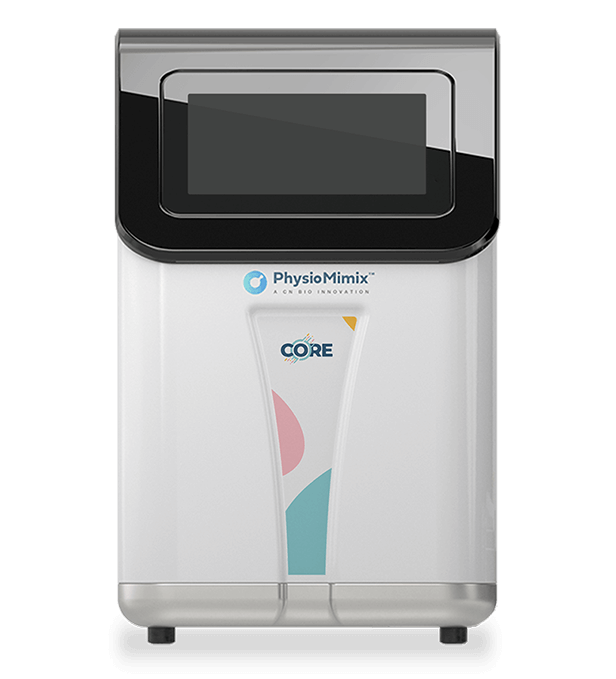
Note. PhysioMimix® OOC Single-organ, Multi-organ, and Higher throughput (HT) Systems mentioned in the broadcast have now been replaced by a universal PhysioMimix Core microphysiological system.