




Resource > Webinars >
The Scars of Fat: The Transability of 3D MASH Microtissues To Model Human/Murine MASH
The Transability of 3D NASH Microtissues To Model Human/murine NASH
Filed under: Disease modeling and MASLD/MASH
Video content if present
This presentation aims to describe the unique role of one of the less studied members of the superfamily, the Bone Morphogenetic Protein 8b (BMP8B), in the pathophysiology of Non-Alcoholic Steatohepatitis (NASH).
Watch this Organ-on-a-chip webinar to learn:
- Discover how a high degree of translatability of the 3D NASH microtissues to model human/murine NASH is achieved.
- Learn about the potential of the 3D NASH microtissues as in vitro tools to study mechanistically TGFβ signalling.
- Hear how the NASH Assay can be used to reveal key mechanistic data underlying the human disease state to help develop new and better medicines.
Bone Morphogenetic Proteins (BMPs) are members of the TGFβ/BMP superfamily involved in the modulation of hepatic metabolism, liver regeneration, and in the progression of chronic liver disease toward fibrosis and hepatocellular carcinogenesis.
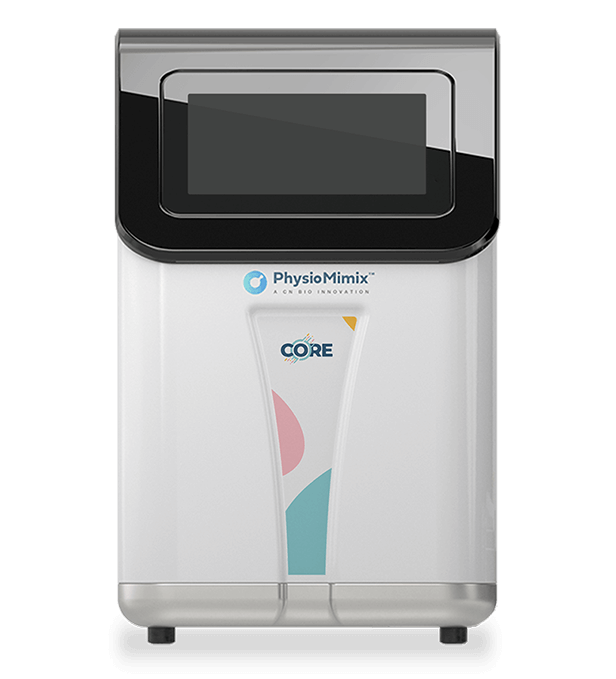
This webinar is based on our PhysioMimix Liver-on-a-chip system.
View our Q&A document from the live event.
Webinar Transcript
The Scars of Fat: The Transability of 3D MASH Microtissues To Model Human/Murine MASH
00:00:00: Hello, and thanks for joining us today for the latest Technology Networks webinar, The Scars of Fat: The Transability of the 3D NASH Microtissues to Model Human Murine NASH and TGFβ Signalling (in a Jar.
00:00:12:I’m Gareth Guenigault, Senior Scientist responsible for our NASH projects at CN Bio, and I’m here to moderate the event.
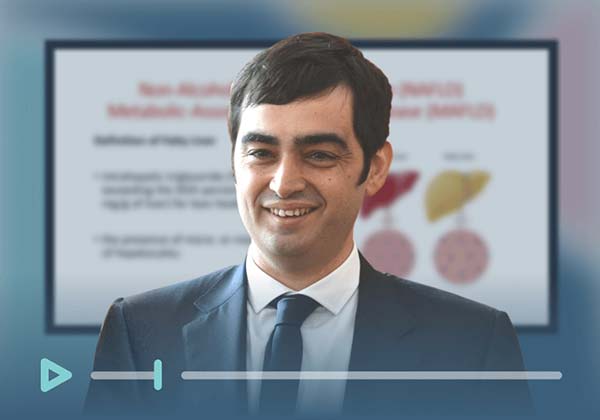
00:00:19: I’m pleased to have MicheleVaccato join us today as your presenter.
00:00:22: Thanks for joining us, Michele.
00:00:24: Dr. Vacca is a Clinical Research Associate at the Institute of Metabolic Science at the University of Cambridge and an Honorary Consultant at the Cambridge University Hospitals.
00:00:34: After his medical studies at the University of Bari, Michele specialised in Internal Medicine and completed his PhD in Oncology and Molecular and Clinical Pathology at the University of Chieti Pescara.
00:00:45: From 2008 to 2014, Michele was also a Research Fellow of the Consorzio Mario Negri Sud, and Visiting Clinician at the ambulatory of Clinical Nutrition Clinica Medica Muri at the University of Bari.
00:00:59: Michaeli’s main clinical interest sits in the area of obesity and hepatic metabolism, particularly the interaction between obesity and the development of cardiometabolic and liver disease.
00:01:09: His main scientific focus is the role of nuclear receptors, miRNAs, TGFβ in hepatic and systemic metabolism and in liver disease.
00:01:19: Following the webinar, we will have a Q&A session, and we welcome any questions that you may have. You can submit questions for the Q&A session at any time during the presentation.
00:01:28: To ask a question, you should enter your question to the box on the left-hand side of your screen and click submit.
00:01:33: We will answer as many as possible during the time available. For any questions we don’t have time to get to, we will be sure you are contacted offline with an answer.
00:01:41: If you experience any technical issues, please click the question mark at the top right-hand corner to request support.
00:01:46: And please remember, you can ask questions at any time, even whilst watching the webinar on demand.
00:01:51: So, without further ado, I will now hand over to Michaeli.
00:01:54: Good morning, everyone, and thank you very much Gareth for the nice introduction.
00:01:59: Today, I have been asked to provide my testimony regarding my collaboration with CN Bio that led to an external validation of the 3D NASH microtissues to model NASH and TGFβ signalling in a jar.
00:02:10: Before starting, please let me state that I have no commercial and financial conflicts of interest to declare, and that my relationship with CN Bio is purely based on scientific collaboration.
00:02:31: My field of interest is represented by non-alcoholic fatty liver disease (NAFLD)that has been recently renamed as metabolically associated fatty liver disease (MAFLD) [now known as Metabolic dysfunction-associated steatotic liver disease(MASLD)].
00:02:45: We define fatty liver when more than 5% of hepatocytes carry lipid droplets, or if you prefer to look at the concentration of lipids inside the liver – when they exceed 55 mg per gram of tissue, which is the highest concentration that has been recorded in known healthy individuals.
00:03:07 Non-alcoholic fatty liver disease (NAFLD)is tightly associated with obesity and metabolic syndrome. It has been estimated that between 50% and 100% of subjects which are overweight/obese, with diabetes, or with a combination of the two, will also present NAFLD at the time of the diagnosis.
00:03:32: Not only[that], if you look at the problem the other way around, how many subjects with NASH are overweight/obese, with increased blood pressure, or with lipidaemia – the numbers will not change from 50% to 100%.
00:03:46: It’s important to study NAFLD because it is associated with increased mortality because of its intrinsic risk of increasing cardiovascular disease, but also because up to 40% of subjects with the fatty liver will develop a pro-inflammatory and pro-fibrotic form of the disease known as non-alcoholic steatohepatitis (NASH), which has the potential to progress towards cirrhosis. And cirrhosis is a risk factor for hepatocellular carcinoma and for liver insufficiency; which are the two main causes why we request a liver transplant.
00:04:30: Because of the obesity epidemic, over the years, we have observed a progressive increase of the number of admissions into the hospital because of NAFLD.
00:04:40: And in the US, also the number of transplants requested because of non-alcoholic steatohepatitis (NASH) have been literally doubling over the last decade.
00:04:53:If you consider that this dash bar is represented by hepatitis C and the new antiviral treatments are preventing the progression toward advanced liver disease, so we are expecting this line to drop down.
00:05:08: NAFLD is expected to become the first leading cause of transplants in the US and in the westernized world into the next.
00:05:17: This is thus really important to understand where hepatic factor comes from, and how NASH progresses towards cirrhosis.
00:05:27: With regards to the sources of fat accumulation into the liver, we have recently published a reading in Gastroenterology, where we claim that fat accumulation into the liver is all a matter of balance between influx and efflux.
00:05:42: With regards to influx, it’s really important the dysfunction of the adipose tissue that leads to peripheral adipose tissue insulin resistance. And peripherally, insulin is important to inhibit the hormone sensible lipase.
00:05:58: When the adipose tissue becomes insulin resistant, a lot of free fatty acids are released into the bloodstream, [and] especially when we talk about the visceral adipose tissue. These will target the liver.
00:06:15: Peripheral adipose tissue insulin resistance is also associated with hyperinsulinemia, and insulin into the liver will activate the steroid response element binding protein (SRBP), which is an abstinent regulator of de novo lipogenesis (DNL), the process that leads to fatty acid formation that then are reused to build up complex lipids like triglycerides.
00:06:40: Not only in a condition of hyperglycaemia, or in case of an enhanced dietary intake of refined carbohydrates, glucose and fructose are able to activate into the hepatocytes and other transcription factors, the carbohydrate response element binding protein that will turbo boost the normal lipogenesis
00:07:03: In terms of dietary intake, it’s also important to look to the composition and the amount of fat that we eat. And also cholesterol is a main determinant, because it has been shown in animal models that if you eat more than 0.2-2% of cholesterol, this will lead to an enhanced production of oxysterols into the liver. That will activate the liver X-receptor, thus leading to the transcription of SRBP1 further boosting the de novo lipogenesis process.
00:07:37: What happens into fatty liver is that associated to an enhanced influence, you will also observe a reduction of mitochondrial fatty acid oxidation and also an impairment of the export of lipids into lipoproteins such as VLDL.
00:07:59: The hepatocytes will try to counteract these processes, activating some less physiological and less efficient metabolic programs, such as omega oxidation, which is important for very long fatty acids, and peroxisomal oxidation.
00:08:20: These processes are not only less efficient in terms of production of ATP, but they are also associated to an enhanced production of reactive oxygen species that will lead to apoptosis, compensatory proliferation, senescence, and an enhanced production of pro-inflammatory mediators.
00:08:40: These pre-inflammatory mediators will prime the hepatic resident macrophages, that we call Kupffer cells, that will further amplify this pro-inflammatory wave, producing cytokines, chemokines, and growth factors that will lead to the recruitment from the bloodstream of different inflammatory cells.
 Dr. Michele Vacca