

Resource > Scientific publications >
Addressing the Challenges of Low Clearance in Drug Research
Filed under: ADME and Drug metabolism

Summary
This 2015 AAPS Journal review by Li Di and R. Scott Obach, both drug metabolism scientists at Pfizer, explains why low-clearance compounds cannot be characterized reliably with standard in vitro liver assays and sets out the methods developed to extend the measurable range of intrinsic clearance (CLint). It is a review article and presents no original experimental data of its own, although it reports four internal Pfizer case studies and previously presented conference data. Among the long-term hepatocyte culture systems it assesses is the LiverChip, a microfluidically perfused three-dimensional (3D) hepatocyte culture platform in the technology lineage that CN Bio now supplies as the PhysioMimix® Core microphysiological system (MPS). The authors report that in the compound set tested, clearance predictions from the perfused 3D liver system were closest to in vivo values for the low-clearance compounds, and were underpredicted for the moderate and high-clearance compounds.
Study facts at a glance
| Publication | Di L, Obach RS. Addressing the Challenges of Low Clearance in Drug Research. The AAPS Journal. 2015;17(2):352-357. Received 6 September 2014, accepted 20 October 2014, published online 8 January 2015. |
| DOI | 10.1208/s12248-014-9691-7 |
| Article type | Review article. No original experimental data. Includes four unpublished Pfizer case studies and data previously presented at ISSX. |
| Author perspective | Both authors work in Pharmacokinetics, Dynamics and Metabolism at Pfizer Inc., Groton, Connecticut, writing as drug metabolism and pharmacokinetics (DMPK) end users rather than platform developers. |
| CN Bio technology discussed | LiverChip, described in the review as a microfluidically perfused 3D hepatocyte culture system in which culture medium recirculates through the tissue. This is the platform lineage CN Bio now supplies as PhysioMimix Core with Multi-chip Liver plates. The review predates the PhysioMimix name. |
| Scope | Methods for measuring intrinsic clearance, identifying metabolites, and assigning clearance mechanisms for compounds that show no measurable turnover in standard liver microsomal or suspension hepatocyte assays. |
| Comparator | Standard human liver microsomal and suspension hepatocyte assays throughout, plus single-species and allometric scaling from preclinical species. For the perfused 3D liver system specifically, one cited study used static two-dimensional (2D) 24 h hepatocyte culture as the comparator. Two alternative long-term systems, HµREL and HepatoPac, are assessed alongside. |
| Main argument | Standard microsomal and hepatocyte assays have a resolution floor below which CLint cannot be measured, and working at that floor overestimates clearance and dose while underestimating half-life. Four approaches extend the measurable range: biexponential modeling of prolonged incubations, the hepatocyte relay method, metabolite formation quantified against biosynthesized standards calibrated by quantitative nuclear magnetic resonance (qNMR), and long-term hepatocyte culture systems that sustain drug-metabolizing enzyme activity for days. For perfused and cocultured hepatocyte systems, the review’s assessment is that sustaining enzyme activity over days is what makes low-clearance measurement possible, and that the resulting predictions were most accurate for slowly metabolized compounds. The authors judge routine adoption in drug discovery achievable but not yet realized. |
Table of Contents
What this review is about
Low clearance is usually something a project team wants. Slowing metabolism reduces dose, increases exposure, and prolongs half-life. The difficulty the review addresses is measurement rather than design: the authors define low clearance as no significant turnover of the parent compound in a typical liver microsomal or suspension hepatocyte assay, which means the property the team has engineered is the one its assays can no longer resolve.
The consequences are set out in concrete terms. Because the reported CLint value sits at the assay’s lower limit rather than at the compound’s true value, clearance is overpredicted, projected dose is inflated, and clinical half-life is underpredicted. The authors describe candidates that entered clinical research on the assumption of a human half-life of a few days and turned out to have half-lives of weeks or months. Compounds have failed in the clinic because a very long half-life was incompatible with the intended use, whether that meant a short duration of action for an on-demand medicine, short target occupancy to limit side effects, a workable dosing regimen, accumulation risk, or the ability to wash the compound out when needed.
A second set of consequences concerns mechanism rather than magnitude. Experiments that infer clearance mechanisms from parent depletion, including reaction phenotyping and the assignment of enzyme and transporter involvement, are compromised or impossible when depletion cannot be measured. That matters downstream, because these data shape drug-drug interaction study design, subject exclusion criteria, and decisions on pharmacogenetics studies and genotyping. Metabolite identification is harder as well, since slowly metabolized compounds generate less metabolite and therefore less spectral data for structural assignment. Even the human radiolabel absorption, distribution, metabolism, and excretion (ADME) study becomes more demanding: a long half-life lowers the permitted radioactivity dose on dosimetry grounds, which can force the use of accelerator mass spectrometry rather than liquid scintillation counting, quantitative radiometric profiling suffers as drug-related material becomes dilute, and recovery of radioactivity has been shown to be lower when half-life is long.
The review is equally clear about why this population of compounds keeps growing. High-throughput ADME screening and early metabolite identification allow rapid structure-activity relationship (SAR) work on metabolic stability, so medicinal chemists have become more proficient at designing metabolically stable molecules. New targets, structural classes, and dosing paradigms, including liver targeting and once-weekly dosing, push clearance lower still. A survey of the authors’ internal projects found that about 30% of compounds in their drug discovery portfolios were low clearance, and that for certain projects the entire chemical series was low clearance because of the chemotype.
Explore CN Bio’s ADME applications
Which CN Bio technology does the review discuss?
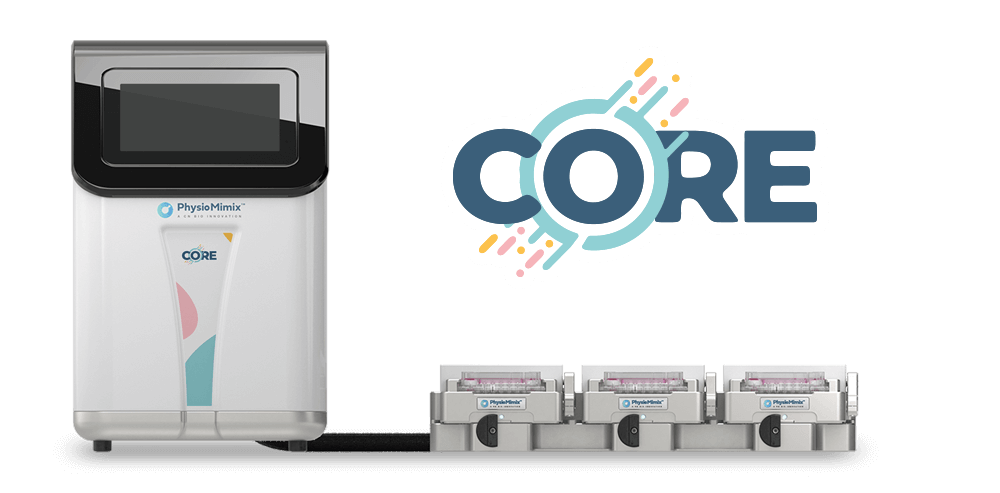
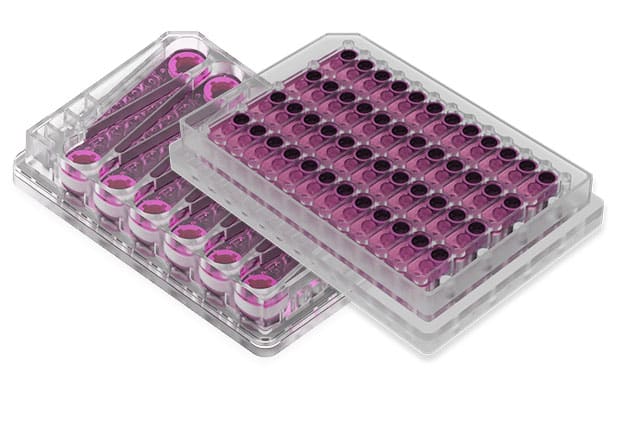
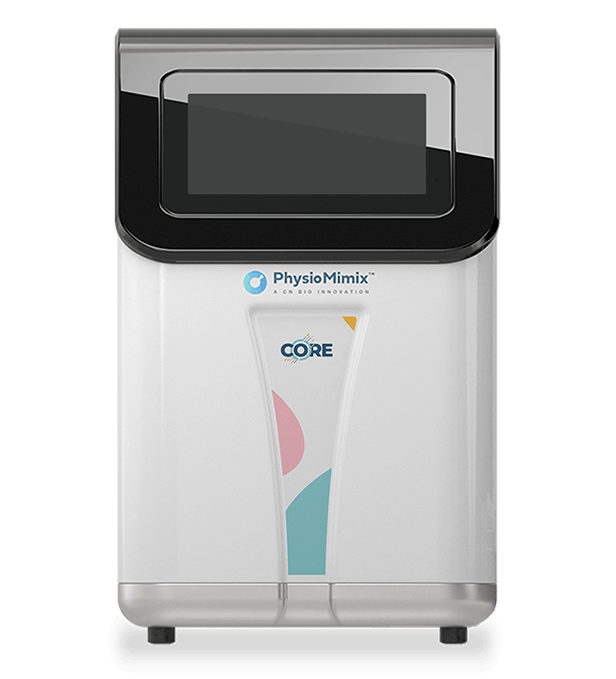
The review discusses the LiverChip, which it describes as a microfluidically perfused 3D hepatocyte culture system in which culture medium recirculates to better reproduce the hepatocyte environment of the liver. This is the technology lineage that CN Bio now supplies as the PhysioMimix Core microphysiological system, used with Multi-chip Liver plates to culture primary human hepatocytes as perfused 3D microtissues. The review was published in 2015 and predates the PhysioMimix name, so it refers to the platform throughout by its earlier name.
Two bodies of work are cited. The first was generated in the authors’ own laboratory at Pfizer and presented at ISSX in 2008. It showed the feasibility of measuring CLint for the low-clearance compounds theophylline, tolbutamide, and disopyramide by substrate depletion over a continuous 72 h incubation. The analysis approach is worth noting for anyone designing a comparable liver-on-a-chip study: rather than deriving CLint from an in vitro half-life, as is routine for short microsomal and suspension hepatocyte incubations, the authors treated the data as they would an intravenous pharmacokinetic experiment, measuring concentration against time, calculating AUC, and deriving clearance from that. The review states that AUC can be the preferred calculation for these systems because substrate concentration declines do not always follow a simple monoexponential function.
The results in that dataset separate by clearance class. For the three low-clearance compounds, predicted CLint,u values fell within roughly 2- to 5-fold of the in vivo values, with disopyramide the closest of the three. The high-clearance compounds diclofenac, verapamil, and midazolam were underpredicted by more than 10-fold. The authors summarize this as clearance prediction being more accurate for the low-CLint compounds, which is the context of use they carry into their conclusions.
The second citation is a 2014 study by Vivares et al. in Xenobiotica, which characterized drug-metabolizing enzymes in the perfused system and used it for CLint measurement against a static 2D 24 h hepatocyte culture comparator. Compound disappearance was maintained over 48 h and CLint was determined from in vitro half-life. Five compounds were tested, most of them high clearance. Tolbutamide CLint was measured in hepatocytes from three donors, giving an overall value of 0.056 mL/h/million cells, which scales to about 2 mL/min/kg body weight.
Both datasets predate the current platform generation and its validated protocols, so they describe the state of the technology at the time of writing rather than its present performance. CN Bio’s drug metabolism application covers the assays now run on perfused Liver MPS for slowly metabolized compounds.
What the review covers
Where standard assays run out of resolution
The review is specific about why standard assays cannot simply be run harder or longer. In liver microsomal incubations, protein concentration is usually held below 2 mg/mL to prevent excessive nonspecific binding, and incubations are usually kept under an hour because enzyme activity declines slowly and longer measurement would underestimate intrinsic clearance. Suspended hepatocytes are kinetically competent for about 4 h, or perhaps 6 h, before viability and activity fall away. Adding more microsomes or more cells, or simply incubating for longer, is not an acceptable substitute.
That gives a floor. The lower limit of CLint measurable in liver microsomes is about 12 µL/min/mg protein, assuming a limit of 120 min for a measurable in vitro half-life, which scales to about 10 mL/min/kg body weight in human at 0.5 mg/mL microsomal protein over a 1 h incubation. For a 4 h human hepatocyte suspension containing 0.5 million cells/mL, the lower limit is about 2.5 µL/min/million cells, scaling to about 6.3 mL/min/kg, roughly one third of hepatic blood flow. At volumes of distribution of 0.2, 0.7, and 2.5 L/kg, that limit corresponds to half-lives of about 4, 13, and 47 h respectively, assuming a plasma protein binding value of 0.1 and a blood to plasma ratio of 1. Any compound cleared more slowly than this returns the limit, not its own value.
The modeling approach
One option is to increase the amount of enzyme and prolong the incubation, accepting that nonlinear biphasic kinetics may appear as enzyme activity is lost. Jones et al. reported biphasic kinetic profiles for triazolam, diazepam, and clonazepam in rat liver microsomes and fitted the parent depletion data to a biexponential model to account for that loss. The kinetic parameters recovered from the biexponential fit were equivalent to those from a monoexponential fit at low microsomal protein concentration with short incubation times.
The hepatocyte relay method
The relay method receives the most detailed treatment and the authors are its developers. The concept is straightforward: incubate the test compound with suspended hepatocytes for 4 h, then transfer the supernatant to freshly thawed hepatocytes and incubate again. Repeated five times, this reaches a cumulative incubation of 20 h while keeping every individual incubation within the window in which the cells remain competent. The lower limit achievable depends on the number of relays, and raising hepatocyte density lowers it further, with a 2-fold increase in cell density halving the CLint limit where binding to hepatocytes has minimal effect.
Its practical attractions are laid out plainly. The assay uses the same format and the same lot of hepatocytes as the standard metabolic stability assay, so project teams can adopt it without new equipment. Cryopreserved pooled hepatocytes keep drug-metabolizing enzyme activities consistent across the months or years a discovery project runs. Supernatant plates can be frozen between relays to fit around laboratory schedules, and the cost is minimal. Where a compound binds strongly to plastic, buffer controls can show a significant decline, and a correction can be applied on the assumption that nonspecific binding is similar with and without cells. The authors report good correlation with in vivo intrinsic clearance in human, rat, and dog, and the method has been used for CLint determination, metabolite identification, and reaction phenotyping with P450 selective inactivators to estimate the fraction of metabolic clearance attributable to specific enzymes.
Four case studies from Pfizer projects show what that resolution buys:
Reaction phenotyping. With no metabolite standards or radiolabeled material available, CYP-specific chemical inhibitors were added to the relay assay to determine the fraction metabolized by each enzyme. Those values guided clinical protocol design and were later confirmed by human carbon-14 ADME studies.
Dose prediction. For a series in which most compounds were low clearance, projected doses of 400 to 700 mg twice daily had been derived from the lower limit CLint value in human liver microsomes, with hepatic clearance below 5 mL/min/kg and a volume of distribution of about 1 L/kg. Twice-daily dosing had been chosen to keep the peak to trough ratio low, because the side effect was driven by maximum concentration. The relay assay returned measurable intrinsic clearance and a hepatic clearance of 0.5 to 2 mL/min/kg, cutting the projected dose to 50 to 120 mg twice daily and giving the team the confidence to advance the series.
Half-life estimation. A development candidate showed no turnover in standard human liver microsomal or hepatocyte assays, so human clearance was predicted by single-species scaling from rat and dog, which gave a half-life of 4 to 7 h. The observed human half-life was 15 to 17 h. The relay assay estimated 15 to 18 h.
Diagnosing an in vitro to in vivo disconnect. A compound entered the clinic on the assumption of minimal metabolic clearance, with hepatic uptake, biliary clearance, and renal clearance assumed to dominate on the basis of preclinical species and sandwich-cultured human hepatocytes. The human carbon-14 ADME study found that about 50% of the dose was metabolized. The relay assay predicted human unbound intrinsic clearance within 2-fold of the clinical value.
Metabolite formation with qNMR-calibrated standards
Measuring parent depletion requires at least 10 to 15% turnover to be reliable, since most bioanalytical methods return accuracy and precision values in that range. Measuring metabolite formation avoids the problem: distinguishing 1.00 µM from 0.98 µM parent is difficult, while measuring 20 nM of a metabolite against a time-zero control in which it is below the limit of detection is straightforward.
The obstacle is calibration. Without an authentic standard, quantitation cannot be done, and for mass spectrometry the response factor depends heavily on analyte structure and physical properties, so the parent compound’s response factor cannot be assumed to apply to its metabolites. Ultraviolet and visible light detection is less sensitive to this, although a change in the chromophore during metabolism removes that advantage too. Radiolabeled material solves the problem where it exists, but radiosynthesis is rarely justified early in discovery, and chemical synthesis of metabolite standards is costly and slow unless the metabolite happens to be a synthetic precursor of the parent.
The authors’ solution is to biosynthesize the metabolites and calibrate them by quantitative NMR. Incubations of 10 to 50 mL containing 10 to 100 µM parent compound are run with an appropriate enzyme source, such as liver microsomes, S9 fraction, or recombinant enzymes with cofactors including nicotinamide adenine dinucleotide phosphate (NADPH) and uridine diphosphate glucuronic acid (UDPGA). Metabolites are extracted, isolated by high-performance liquid chromatography (HPLC), evaporated, reconstituted in deuterated solvent, and their solution strength determined by NMR spectroscopy. Advances in cryomicroprobe technology and magnet strength make this feasible at volumes below 50 µL and concentrations of 50 µM. The resulting stock then supports a standard curve for HPLC-MS analysis.
In the worked example, five metabolites of a low-CLint lead candidate were quantified this way. Vmax and KM values for each reaction were used to calculate individual CLint values, which were summed to give a total, and the same standards supported reaction phenotyping that assigned CYP3A4, CYP1A2, and CYP2C19 in an approximate ratio of 0.85:0.10:0.05. The authors are candid that this is not an approach for hundreds of compounds. It suits low-clearance candidates approaching nomination into preclinical development, or individual leads earlier on.
Long-term hepatocyte culture systems
The rationale for this section is stated at the outset: drug-metabolizing enzyme activities in hepatocyte suspensions and standard culture are not long-lived, so culture systems have been specialized to sustain them. The review groups the innovations into engineered apparatus that better reproduces the multicellular structure and flow of intact liver, naming the LiverChip and HµREL, and coculture structures that better reproduce the cell population of intact liver, naming HepatoPac.
The perfused 3D system and its low-clearance data are described in the section above. Work by Novik et al. using the HµREL system examined consumption of compounds including the low-CLint drugs indomethacin, antipyrine, and carbamazepine. Only the indomethacin data are shown, but the authors plot scaled in vitro clearance against in vivo clearance across the compounds tested and report an IVIVC that improved in the coculture flow system relative to static and monoculture systems. HepatoPac, a micropatterned hepatocyte-fibroblast coculture in which the cells form hepatocyte islands, sustained drug-metabolizing enzyme activities for several days without a medium change. Chan et al. demonstrated this for low-CLint compounds including theophylline, diazepam, tolbutamide, and meloxicam using hepatocytes from three individual donors, and, as with the perfused 3D system, low-CLint compounds were best predicted while high-CLint compounds were underpredicted.
The section closes with a judgment that applies across all three platforms. Modifications over standard 2D culture, meaning microfluidic flow, stationary support, and coculture, appear necessary to maintain drug-metabolizing enzyme activity over periods of days. Adapting these approaches to routine use in a drug discovery setting had not been realized at the time of writing but should be achievable, and would require a reliable long-term supply of hepatocytes whose panel of enzyme activities does not vary from year to year.
Why this review matters
The value of this article lies in its perspective. Two DMPK scientists inside a large pharmaceutical company set out what a low-clearance assay has to deliver, and they assess perfused and cocultured liver systems against that specification rather than against a general aspiration for human relevance. Every model in the review is given its strengths and its limits, including the authors’ own relay method.
Three points are worth carrying forward. The first is the context of use the data support. Across both the perfused 3D system and the micropatterned coculture, prediction was most accurate for slowly metabolized compounds and least accurate for rapidly metabolized ones. That is a clear statement of where a long-term liver model earns its place, and it is the opposite of the pattern seen with standard assays, which handle high-clearance compounds well and lose resolution at the bottom of the range. For teams deciding where a perfused Liver MPS assay fits alongside microsomes and suspension hepatocytes, that complementarity is the practical argument.
The second is methodological. Deriving clearance from AUC rather than in vitro half-life, because concentration declines in a recirculating system need not be monoexponential, is a specific piece of study design guidance that remains relevant to anyone running depletion assays on perfused platforms. Interpretation of in vitro to in vivo translation depends on getting that calculation right.
The third is operational. The authors identify hepatocyte supply and year-to-year consistency of enzyme activity as the barrier to routine use, not biology. That reframes adoption as a question of reagent logistics and assay standardization, which is where much of the subsequent work on Liver MPS characterization and reproducibility has been directed, including a co-publication with the FDA on reproducibility in Liver MPS drug toxicity, metabolism, and accumulation assays.
Key study takeaways
- The review defines low clearance as no significant turnover of parent compound in typical liver microsomal or suspension hepatocyte assays, and quantifies the resulting floor: about 12 µL/min/mg protein in microsomes and about 2.5 µL/min/million cells in a 4 h hepatocyte suspension, the latter scaling to roughly one third of hepatic blood flow.
- Working at that floor overestimates clearance and projected dose while underestimating half-life. One case study saw projected doses fall from 400 to 700 mg twice daily to 50 to 120 mg twice daily once real intrinsic clearance values were available.
- The LiverChip, a microfluidically perfused 3D hepatocyte culture system in the lineage CN Bio now supplies as PhysioMimix Core, measured CLint for theophylline, tolbutamide, and disopyramide over a continuous 72 h incubation, with clearance derived from AUC rather than in vitro half-life.
- Prediction accuracy separated by clearance class. Low-clearance compounds fell within roughly 2- to 5-fold of in vivo CLint,u values, while high-clearance compounds were underpredicted by more than 10-fold. The same pattern was reported for HepatoPac.
- Alongside culture systems, the review describes three non-MPS approaches: biexponential modeling of prolonged incubations, the hepatocyte relay method reaching a cumulative 20 h incubation across five transfers, and metabolite formation quantified against biosynthesized standards calibrated by qNMR.
- The authors judge that microfluidic flow, stationary support, and coculture are necessary to sustain drug-metabolizing enzyme activity over days, and that the barrier to routine drug discovery use is a stable hepatocyte supply with consistent enzyme activity rather than the biology of the models.
Why the review is worth reading
This review is useful because it states the low-clearance problem in numbers rather than in general terms, which makes it possible to work out whether a given compound sits inside or outside the range of the assays already in use. For a DMPK scientist choosing how to characterize a slowly metabolized candidate, it lays out four routes with their costs, throughput, and evidence, and it says plainly which of them suits early discovery and which suits a single lead approaching nomination. For anyone evaluating a perfused Liver MPS for drug metabolism work, it also provides something less common in the literature: an assessment written by end users with no commercial interest in the platform, reporting where prediction held up and where it did not. Teams weighing a first study rather than a capital purchase can reach the same evidence through ADME contract research services, and the end user perspective on organ-on-chip applications in drug discovery offers a broader companion view from the same industry standpoint.
FAQs
It is a review article in The AAPS Journal by Li Di and R. Scott Obach of Pfizer. The review surveys methods for characterizing low-clearance compounds and presents no original experimental data, although it includes four internal Pfizer case studies and data previously presented at ISSX.
The review discusses the LiverChip, a microfluidically perfused three-dimensional hepatocyte culture system, which is the technology lineage CN Bio now supplies as the PhysioMimix Core microphysiological system with Multi-chip Liver plates. The review was published in 2015 and uses the platform’s earlier name throughout.
In work from the authors’ laboratory, the perfused three-dimensional liver system was dosed and sampled serially, and intrinsic clearance of the low-clearance compounds theophylline, tolbutamide, and disopyramide was measured by substrate depletion over a continuous 72 h incubation. Clearance was calculated from area under the concentration-time curve rather than from in vitro half-life, because concentration declines in a recirculating system do not always follow a simple monoexponential function.
The review addresses the inability of standard human liver microsomal and suspension hepatocyte assays to resolve intrinsic clearance below a certain value, which causes clearance and projected dose to be overestimated and clinical half-life to be underestimated. It also covers the knock-on difficulty of identifying metabolites and assigning clearance mechanisms for compounds with little parent turnover.
The review describes four approaches: biexponential modeling of prolonged, high-enzyme incubations; the hepatocyte relay method, which transfers supernatant across five successive 4 h hepatocyte incubations to reach a cumulative 20 h; quantitation of metabolite formation using biosynthesized metabolite standards calibrated by quantitative nuclear magnetic resonance; and long-term hepatocyte culture systems including the perfused three-dimensional LiverChip, HµREL, and HepatoPac.
Every method is assessed against standard human liver microsomal and suspension hepatocyte assays, and against single-species or allometric scaling from preclinical species. For the perfused three-dimensional liver system, one cited study used static two-dimensional 24 h hepatocyte culture as its comparator, and predictions from all systems were compared with in vivo intrinsic clearance values.
The endpoints covered are intrinsic clearance, unbound intrinsic clearance, hepatic clearance, in vitro half-life, in vitro to in vivo correlation, fraction metabolized by individual cytochrome P450 enzymes, metabolite formation rates with Vmax and KM values, and projected clinical dose and half-life.
The review reports that perfused and cocultured hepatocyte systems underpredicted clearance for moderate and high-clearance compounds, that the qNMR metabolite standard approach is unsuited to screening large compound numbers, and that routine drug discovery use of long-term culture systems requires a stable hepatocyte supply whose enzyme activities do not vary from year to year. The LiverChip data cited date from 2008 and 2014 and describe the platform as it stood at the time of writing.
The review quantifies the lower limit of standard clearance assays, which allows a scientist to judge whether a slowly metabolized compound falls outside their current toolkit, and it sets out four alternative methods with their throughput, cost, and supporting evidence. It also identifies the context of use in which perfused three-dimensional liver models performed best, namely compounds with low intrinsic clearance.
Full citation
Di L, Obach RS. Addressing the Challenges of Low Clearance in Drug Research. The AAPS Journal. 2015;17(2):352-357. DOI: 10.1208/s12248-014-9691-7
Related products and services
Contract research services
Discover how to utilize our cross-species models to inform next-step decision making via our DILI in vitro Contract Research Services here.
Add PhysioMimix Core in your lab
To develop your own cross-species Liver MPS models, you will need: