




Resource > Posters >
Using a Gut/Liver Microphysiological System to Predict Drug-Drug Interactions in Humans
Filed under: ADME, Drug absorption, Drug bioavailability, Drug metabolism, and General OOC
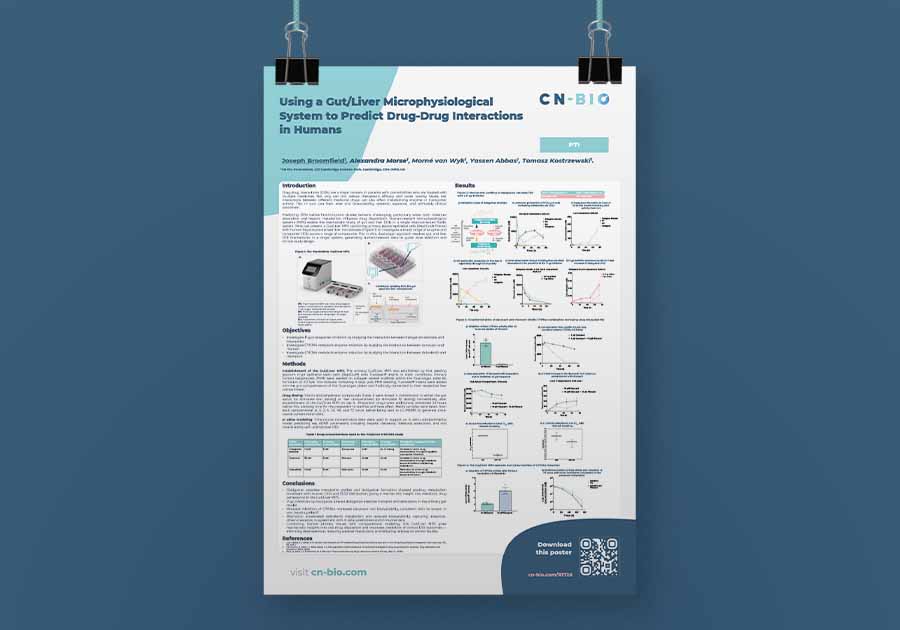
Drug-drug interactions (DDIs) are a major concern in patients with comorbidities who are treated with
multiple medicines.
Not only can this reduce therapeutic efficacy and cause toxicity issues, but interactions between different medicinal drugs can also affect metabolising enzyme or transporter activity. This in turn can then alter oral bioavailability, systemic exposure, and ultimately clinical outcomes.
Predicting DDIs before first-in-human studies remains challenging, particularly when both intestinal absorption and hepatic metabolism influence drug disposition. Human-relevant microphysiological systems (MPS) enable the mechanistic study of gut and liver DDIs in a single interconnected fluidic system. Here, we present a Gut/Liver MPS combining primary jejunal epithelial cells (RepliGut® Planar) with human hepatocyte-derived liver microtissues to investigate a broad range of enzyme and transporter DDIs across a range of compounds.
This in vitro dual-organ approach resolves gut and liver DDI mechanisms in a single system, generating human-relevant data to guide dose selection and clinical study design.
Authors: Joseph Broomfield, Alexandra Morse, Morné van Wyk, Yassen Abbas, Tomasz Kostrzewski – CN Bio