

• Skip to main content
  • Skip to footer
cnb1576_uk-reg-news_navigation-ad_v1
  • About us
  • News
  • Events
  • Careers
cn-bio-organ-on-a-chip-logo
  • Products
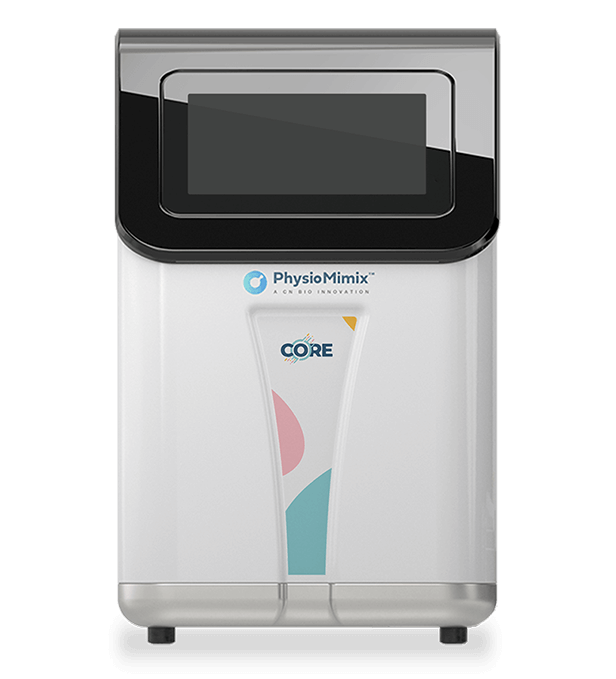
    • PhysioMimix® Core Microphysiological System
    • Consumables
      • PhysioMimix® Multi-chip plates
      • 3D validated cells
      • NASH-in-a-box
    • Organ-on-a-chip models
    • Gut/Liver-on-a-chip
    • Lung-on-a-chip
    • Support packages
  • Applications
    • Disease modeling
    • Safety toxicology
    • ADME
  • Services
    • Non-Alcoholic Steatohepatitis
    • Drug-Induced Liver Injury
    • ADME
  • Technology
  • Resources
  • Company
    • About us
    • Events
    • News
    • Careers in Biotech
  • Contact us

Explore our solutions


PhysioMimix® is a suite of hardware, consumables and assay protocols that enable you to recreate complex human biology and accurately predict human drug responses.

PhysioMimix Core

cnb1476_physiomimix-core_mark_mocks_system_v2
Learn more

Consumables

Multi-chip plates
3D validated cells
NASH-in-a-box
Learn more

Models

Single-organ models
- Liver-on-a-chip model
- Lung-on-a-chip model
Multi-organ models
- Gut/Liver-on-a-chip models

Support packages

PhysioMimix® support packages

Discover the applications


Investigate the validated core application areas that our PhysioMimix® products and services support

Learn more

Disease modeling

Metabolic dysfunction-associated steatohepatitis
Hepatitis B
Pulmonary infection
Learn more

Safety toxicology

Drug-induced liver injury
Immune-mediated liver injury
Learn more

ADME

Drug absorption
Drug metabolism
Drug bioavailability
Oligonucleotide delivery
Learn more

Studies as a service


Our team will work collaboratively with you to design a study around your research goals and generate actionable data within weeks

Learn more
icon-nash-1-150x150.png MASLD/MASH
icon-dili-tox-150x150.png Drug-induced liver injury
icon-adme-150x150.png ADME

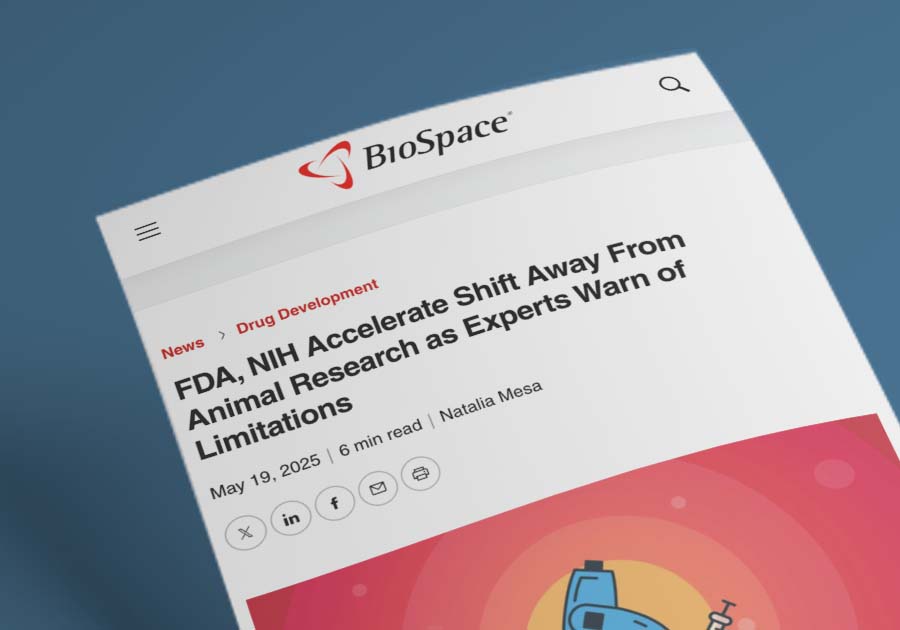
FDA and NIH accelerate shift away from animal testing as experts discuss pros and cons

May 19, 2025

Resource > Articles >

FDA and NIH accelerate shift away from animal testing as experts discuss pros and cons


7 key factors to guide your selection

Filed under: General OOC and MASLD/MASH

cnb1490 fda nih animal testing resource image v1 | shift away from animal testing
Read the full article

In a watershed moment for preclinical and biomedical research, the U.S. Food and Drug Administration (FDA) and the National Institutes of Health (NIH) have unveiled bold plans to reduce reliance on and shift away from animal testing. The strategy emphasizes the application of advanced, human-relevant methods, like New Alternate Methodologies (NAMs), such as Organ-on-a-chip (OOC) technology, also known as Microphysiological Systems (MPS), AI-based models, and organoids, with animal testing becoming the exception rather than the rule.

A groundbreaking policy shift

On April 10, 2025, the FDA released a landmark roadmap aimed at phasing out animal research with a shift away from animal testing requirements for certain therapies, particularly highlighting monoclonal antibody (mAbs)- based drugs. The agency is encouraging the submission of New Approach Methodologies (NAMs), with potential incentives like streamlined review for submissions that rely on strong NAMs data.

Complementing this, the NIH followed suit, a couple of weeks later, by announcing its intent to prioritize grant proposals based on non-animal research methods. It also established the Office of Research Innovation, Validation, and Application (ORIVA) to spearhead the development, validation, and implementation of these innovative approaches across the agency’s biomedical portfolio.

Collectively, the FDA and NIH are steering research toward more human-relevant methods, such as, human organoids, OOC, AI-driven analyses, and real-world population health data as powerful alternatives to traditional animal models. The FDA is also projecting that animal testing will become “the exception rather than the norm” within the next three to five years.

Voices of enthusiasm…and caution

Tomasz Kostrzewski, CSO at CN Bio, expressed genuine surprise and clear optimism. “It’s fantastic,” he remarked. “There’s a place for animals in drug discovery, but animal research shouldn’t be the go-to.”

Joseph Wu, a Stanford Medicine cardiologist and co-founder of Greenstone Biosciences, echoed this view, pointing to the frequent lack of human relevance in animal models—especially inbred mice—and praising the potential of stem-cell derived organoids to accelerate high-throughput screening of candidate therapies.

Aysha Akhtar, CEO of the Center for Contemporary Sciences, warned pharmaceutical firms to embrace this shift swiftly to avoid the risk of being “left behind”.

Despite the excitement, experts also stress that NAMs are not yet ready to fully replace animal use but support the shift away from animal testing. Organoid models, often lack the complexity of full human physiological systems, while some advanced models and AI systems pose additional implementation costs, infrastructure demands and workforce training requirements.

Looking Ahead

The FDA and NIH’s joint push toward human-based, AI-driven, and organ-mimetic models signals a profound transformation in biomedical research. Tomasz Kostrzewski’s optimism captures the pioneering spirit of this shift, yet its success hinges on robust validation, funding, and institutional will.

Original article was published in BioCompare on 19 May, 2025.

Tom3 | shift away from animal testing

Dr. Tomasz Kostrzewski

Chief Scientific Officer

Dr. Tomasz Kostrzewski has more than 15 years of experience in molecular and cellular biology research. He joined CN Bio in 2015 and was promoted to Director of Biology in 2018 with responsibility for biological model development and collaborative research projects with academia, pharma, and regulators. In 2021 he was promoted to VP of Science and Technology and then to Chief Scientific Officer in 2023, with responsibility for all technical activities, including developing new products, technologies, and assays, as well as contract research services. Dr Kostrzewski has managed multiple grant-funded collaborative projects at CN Bio and is currently the project lead for the collaborative project between CN Bio and the FDA. He has published more than twelve peer-reviewed scientific articles in the last five years and submitted several patent applications. Prior to joining CN Bio, he worked at Imperial College London in the Department of Life Sciences studying immune cell development and stem cell differentiation, as well as at GlaxoSmithKline working in biopharmaceutical drug discovery and development. Dr Kostrzewski holds three degrees from the University of Sheffield and Imperial College London in Cell and Molecular Biology.
    Read the full article

    Tag iconADME

    Speak to our experts

    Request a meeting with one of our OOC experts to see how our products and services can support your studies

    Request a meeting

    Footer

    CN Bio logo

    332 Cambridge Science Park, Milton Road
    Cambridge, CB4 0WN

    UK: +44 (0) 1223 737 941

    US: +1 415 523 4005

    Privacy | Cookies | Regulatory | Accessibility
    Website terms | Terms of sale

    Product Recycling

    ©2025 CN Bio Innovations Ltd
    Registered No. ‍06517359. VAT No. GB978184563

    Latest news

    • CN Bio to participate in 3Rs Collaborative-led project with FDA to build confidence in Liver MPS for DILI – now ISTAND accepted! January 25, 2026
    • Taking organoids to the next level January 14, 2026
    • UK plans to phase out animal testing faster in favor of alternative methods November 11, 2025
    Cyber Essentials Logo

    Modal Title