

Resource > Scientific publications >
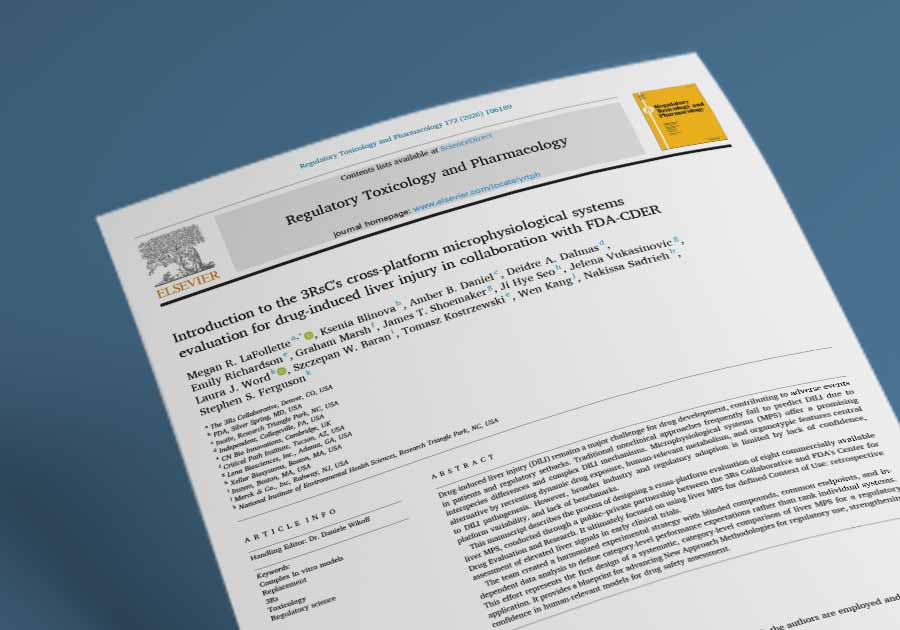
Introduction to the 3RsC’s cross-platform microphysiological systems evaluation for drug-induced liver injury in collaboration with FDA-CDER
Filed under: DILI, Regulatory, and Safety toxicology
Summary
CN Bio ran the PhysioMimix® Core system with the Multi-chip Liver-12 plate as one of eight commercially available liver microphysiological systems (MPS) in a cross-platform drug-induced liver injury (DILI) evaluation designed by the 3Rs Collaborative (3RsC) and the US Food and Drug Administration’s Center for Drug Evaluation and Research (FDA-CDER). This publication describes the design of that project: a single narrow regulatory context of use (CoU), eight blinded compounds supplied as four analogue pairs, common endpoints across platforms, and independent data analysis by the National Institute of Environmental Health Sciences (NIEHS). It is the first published design for a systematic, category-level comparison of liver MPS aimed at a regulatory application, and it gives drug safety teams a working template for what a qualification-ready New Approach Methodology (NAM) study has to contain before regulators can act on the data.
Study facts at a glance
| Publication | LaFollette MR, Blinova K, Daniel AB, Dalmas DA, Richardson E, Marsh G, Shoemaker JT, Seo JH, Vukasinovic J, Word LJ, Baran SW, Kostrzewski T, Kang W, Sadrieh N, Ferguson SS. Introduction to the 3RsC’s cross-platform microphysiological systems evaluation for drug-induced liver injury in collaboration with FDA-CDER. Regulatory Toxicology and Pharmacology. 2026;172:106189. Available online 26 July 2026. |
| DOI | 10.1016/j.yrtph.2026.106189 |
| CN Bio product used | PhysioMimix® Multi-chip Liver-12 plate and PhysioMimix Core System |
| How the platform was used | CN Bio tested the blinded compound panel in perfused, scaffold-based 3D liver microtissues at 12 chips per plate, co-culturing primary human hepatocytes (PHHs) and primary human Kupffer cells at a 10:1 ratio, 440,000 cells per chip from a single donor, in 1.6 mL of serum-free medium per well, using repeat dosing that started on day 4 and ran for 10 dosing days across 7 concentrations per compound in technical triplicate. |
| Biological context | Drug-induced liver injury (DILI) in the human liver, modeled on the CN Bio platform with primary human hepatocytes and primary human Kupffer cells from a single donor. Cells were healthy at the point of dosing, and no pre-existing liver disease state was modeled. |
| Comparator | Four compounds with severe DILI liability, each paired with a structurally matched low-risk analogue, tested across eight commercially available liver microphysiological systems (MPS). The paper states that a direct head-to-head comparison between platforms was not possible, and that the project sets category-level performance expectations rather than ranking individual systems. |
| Key readouts | On the PhysioMimix platform: this study focused on a selected subset of seven key functional and injury-related endpoints, including albumin, urea, and cytochrome P450 (CYP) activity measured by P450-Glo assay at the end of maturation, followed by albumin, lactate dehydrogenase (LDH), alanine aminotransferase (ALT), aspartate aminotransferase (AST), CYP3A4 activity, bile acids, and interleukin 6 (IL-6) at final assessment. These endpoints were chosen to address the specific objectives of the study and represent only a subset of the wide range of biochemical, functional, imaging, and molecular analyses that can be performed on the PhysioMimix platform. Across the project, additional endpoints included ATP content and cell viability, while transcriptomics and liquid chromatography-mass spectrometry (LC-MS) profiling were incorporated as exploratory analyses. |
| Main interpretation | The paper reports how a category-level comparison of eight commercial liver MPS was designed around one narrowly defined regulatory context of use, together with the governance, blinding, and contracting lessons behind it. The experimental data are to be reported in a separate publication. The PhysioMimix platform provided the largest number of readouts of all the MPS platforms tested. |
Table of Contents
Which CN Bio product was used?
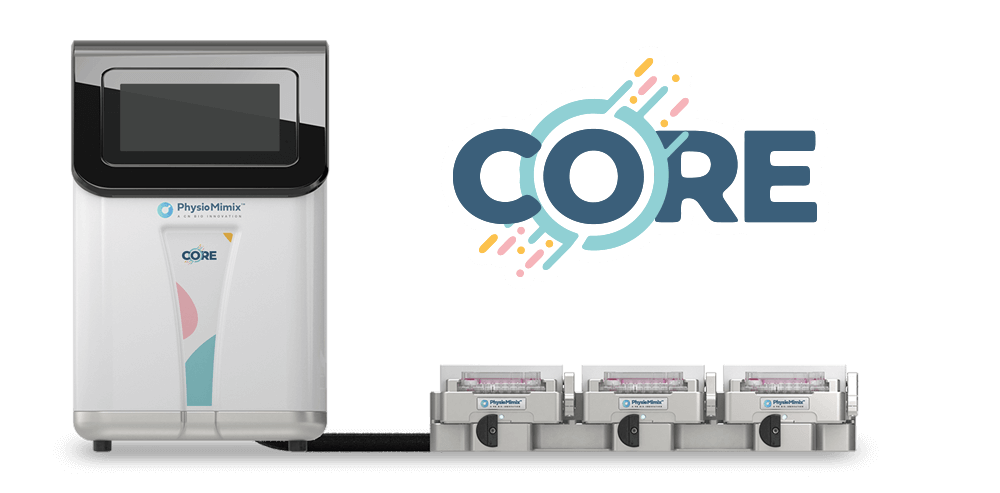
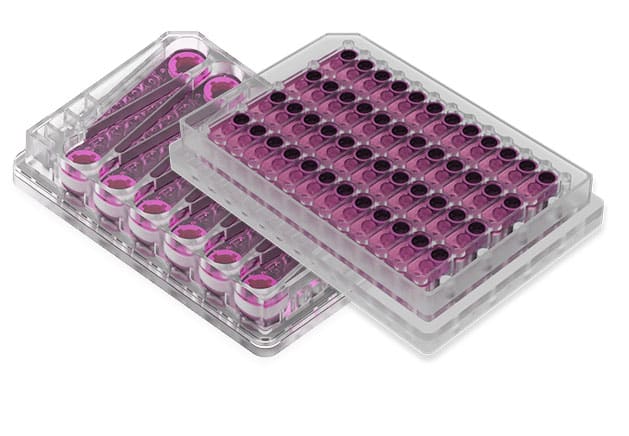
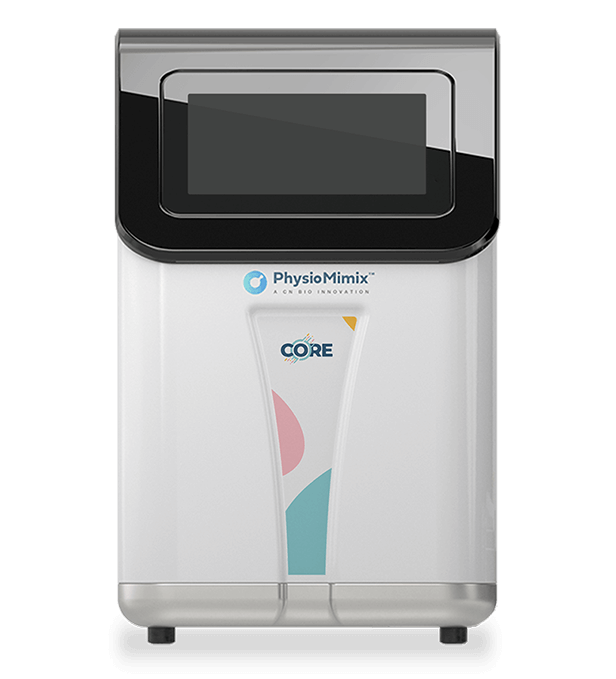
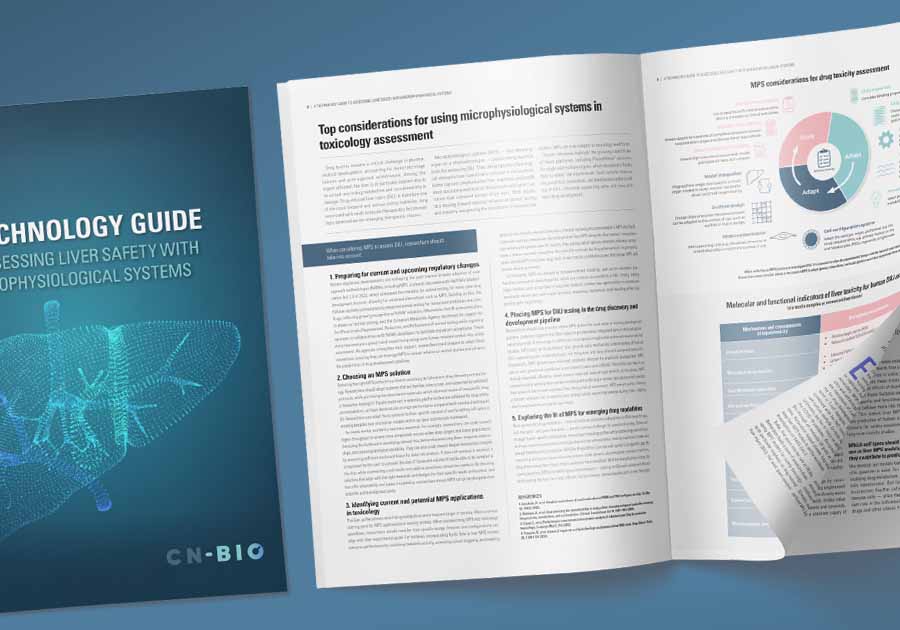
The study used the PhysioMimix Core system with the Multi-chip Liver-12 plate, a perfused 3D culture with a scaffold-based chip and circulating flow. The PhysioMimix liver-on-a-chip model for this project combined primary human hepatocytes and primary human Kupffer cells at a 10:1 ratio, seeded at 440,000 cells per chip from a single donor, with 1.6 mL of serum-free medium per well and repeat compound exposure. The platform-specific protocol reported for CN Bio used three technical replicates, confirmed hepatocyte function at the end of maturation using albumin, urea, and the P450-Glo assay, began dosing on day 4, ran 10 dosing days, and tested seven concentrations per compound. Although the PhysioMimix platform supports a broader range of functional, mechanistic, imaging, and omics-based analyses, this study focused on seven endpoint measurements aligned with its objectives: albumin, lactate dehydrogenase (LDH), alanine aminotransferase (ALT), aspartate aminotransferase (AST), CYP3A4 activity, bile acid, and interleukin 6 (IL-6). The CN Bio liver model maintained culture for 28 days, generated Phase I and Phase II metabolites, and formed bile canaliculi with functional transporters and measurable efflux and uptake. The analytical validity covered 21 published drugs across five studies (Sarkar et al., 2017; Rowe et al., 2018; Rubiano et al., 2021; Novac et al., 2022; Nitsche et al., 2025).
The CN Bio platform generated one of eight MPS-based independent datasets. Compound selection, procurement, blinding, and shipping were handled by NIEHS and its contractors, and data management, statistical evaluation, and format harmonization were handled by the NTP Interagency Center for the Evaluation of Alternative Toxicological Methods (NICEATM) within the NIEHS Division of Translational Toxicology.
Find out more about CN Bio Liver-on-a-chip models here
Find out more about CN Bio DILI assays here
What this paper is about
Drug-induced liver injury remains one of the more stubborn causes of late-stage drug development failure, and conventional animal testing detects it poorly: the paper cites work by Olson et al. (2000) reporting that close to half of drugs found to be hepatotoxic in humans caused no liver toxicity in conventional animal studies. Liver MPS are among the best characterized organ-on-a-chip models in pharmaceutical research, and some have reported the ability to separate hepatotoxic from non-toxic drugs with 87% accuracy. Adoption for regulatory decision-making has still been held back by three practical problems the authors name directly: limited confidence in the data, variability between platforms, and the absence of agreed benchmarks.
This paper is a design and process publication, not a results publication. The 3Rs Collaborative and FDA-CDER built a public-private partnership, beginning in December 2023, to run eight commercial liver MPS against the same blinded compound set under a shared experimental framework.
The context of use investigated was deliberately narrow: a liver MPS used as a retrospective analytical tool to interpret elevated liver enzyme levels seen in early-phase clinical trials, providing weight of evidence to inform whether dosing continues or is modified. That context of use came out of a Critical Path Institute Predictive Safety Testing Consortium workshop and was anchored to a specific clinical inflection point, namely unexplained ALT and AST elevations before Hy’s Law thresholds are reached.
What the researchers found
The main structural finding was that a single uniform protocol across eight platforms was not achievable. Each participating laboratory already had established protocols, positive control compounds, and diagnostic assays, so the project standardized what could be standardized: compound dosing, quality control, documentation, endpoint measurement, and performance criteria. All laboratories used DMSO for test substance preparation at a final concentration of 0.2%, framed exposure levels against multiples of peak plasma concentration (Cmax), included 10x human Cmax as one exposure level, and ran between 3 and 14 dosing days.
The study reported considerable heterogeneity across the eight platforms, painting an accurate picture of the current commercial market. Culture devices included conventional plate formats and chip-based designs with and without fluidic circulation. Cell sources included single-donor and pooled primary human hepatocytes, induced pluripotent stem cell-derived hepatocytes, and cell lines, cultured alone or with non-parenchymal cells or Kupffer cells. Reported culture durations ranged from 13 to 35 days. Assay coverage varied widely. Companies ran between one and seven assays to reach their safety determination, and of the 11 assay types used across the project, none was run by all eight companies. The platform-specific protocol table lists seven final assessment parameters for CN Bio, which was more named endpoints than for any other platform.
Why the paper matters
This paper describes the design of a multi-stakeholder, cross-platform evaluation intended to build regulatory confidence in liver MPS for assessment of DILI. The project uses blinded compounds, shared experimental principles, clinically relevant endpoints, and independent analysis to assess diverse commercial platforms within a defined context of use: retrospectively investigating elevated liver enzymes observed in early-phase clinical trials.
Its main value lies in providing a practical framework for harmonised evidence generation across technically and biologically different liver MPS. The study positions these systems as weight-of-evidence tools that could help interpret clinical liver safety signals and inform dosing decisions
Key study takeaways
- CN Bio used the PhysioMimix Core system with the Multi-chip Liver-12 plate to test a blinded panel of eight compounds as one of eight commercially available liver MPS in a 3RsC and FDA-CDER cross-platform DILI evaluation.
- The CN Bio liver-on-a-chip model in this project co-cultured primary human hepatocytes with primary human Kupffer cells at a 10:1 ratio, 440,000 cells per chip from a single donor, under perfusion in a scaffold-based chip with 1.6 mL of serum-free medium per well.
- The comparison was built on four analogue pairs, each pairing a compound with severe DILI liability against a structurally matched low-risk compound, with identities blinded to the testing laboratories until all study reports were submitted.
- The CN Bio workflow combined maturation checks (albumin, urea, and P450-Glo assay) with a final endpoint panel of albumin, LDH, ALT, AST, CYP3A4 activity, bile acid, and IL-6, run in technical triplicate across seven concentrations and 10 dosing days.
- The project defines a single regulatory context of use, the retrospective interpretation of elevated liver enzymes in early-phase clinical trials, and has an accepted letter of intent with the FDA ISTAND program.
- The paper is a design and process publication. It does not report DILI prediction results, which are to be published separately, and it states plainly that a direct head-to-head comparison between platforms was not possible.
- The CN Bio PhysioMimix platform provided more endpoints than any other platform.
- The PhysioMimix platform offers the broadest analytical capabilities among the liver MPS evaluated, with this study reporting only a focused subset of available biochemical, functional, and molecular readouts.
Why this paper is worth reading
For anyone selecting a liver model, the publication is one of the few places where eight commercial liver MPS are described side by side, including details on the cell types, configuration, format, donor numbers, cell numbers per chip, exposure volumes, culture duration, metabolic competence, hepatocyte biomarkers, bile canaliculi and transport, and the published hepatotoxicity prediction datasets behind each system. That makes it a useful reference for scoping a safety toxicology study, whatever platform a team ends up choosing.
For regulatory strategy, the value sits in the framing. The project treats a liver MPS as a weight-of-evidence tool tied to one clinical question rather than a general-purpose replacement for animal testing, and it builds performance expectations at the level of the model category. Liver MPS results should not be read as a stand-alone binary classifier, partly because the low clinical prevalence of DILI, estimated at roughly 13.9 to 19.1 cases per 100,000 individuals annually, limits positive predictive value even for assays with high sensitivity and specificity.
FAQ
The study used the PhysioMimix® Core system with the Multi-chip Liver-12 plate. The plate provides 12 perfused, scaffold-based liver chips.
CN Bio used the PhysioMimix Core system to culture perfused 3D liver microtissues from primary human hepatocytes and primary human Kupffer cells at a 10:1 ratio, 440,000 cells per chip from a single donor, in 1.6 mL of serum-free medium per well. Repeat dosing began on day 4 and continued for 10 dosing days across seven concentrations per compound in technical triplicate.
The disease area is drug-induced liver injury (DILI) in humans. The CN Bio liver MPS model used single-donor primary human hepatocytes co-cultured with primary human Kupffer cells, with no pre-existing liver disease state modeled.
The paper reports the design of the first systematic, category-level comparison of eight commercially available liver MPS for a defined regulatory context of use, together with the harmonization, blinding, and contracting lessons from running it. DILI prediction results from the eight platforms are to be reported in a separate publication.
The PhysioMimix platform provided more endpoints than any other platform.
The study design compares category-level performance across eight commercially available liver MPS using four compounds with severe DILI liability, each paired with a structurally matched low-risk analogue. A direct head-to-head comparison between platforms was not possible, and the intent was to set performance expectations rather than rank systems.
On the CN Bio platform, hepatocyte function was confirmed at the end of maturation with albumin, urea, and the P450-Glo assay, and final assessment covered albumin, LDH, ALT, AST, CYP3A4 activity, bile acid, and IL-6. Across the project, endpoints also included ATP content, cell viability, and exploratory transcriptomics and LC-MS profiling.
The paper gives drug safety and regulatory teams a reusable template for multi-stakeholder NAM evaluation: a narrow context of use, blinded compounds supplied by an independent body, standardized dosing and documentation, and category-level performance criteria. It also provides a side-by-side technical reference for eight commercial liver MPS platforms.
The project has an accepted letter of intent with the FDA’s Innovative Science and Technology Approaches for New Drugs (ISTAND) program, which the authors describe as the first step toward qualifying liver MPS for context-of-use-specific regulatory use.
Full citation
Related products and services
Contract research services
Discover how to utilize our cross-species models to inform next-step decision making via our DILI in vitro Contract Research Services here.
Add PhysioMimix Core in your lab
To develop your own cross-species Liver MPS models, you will need: