




Resource > Whitepaper >
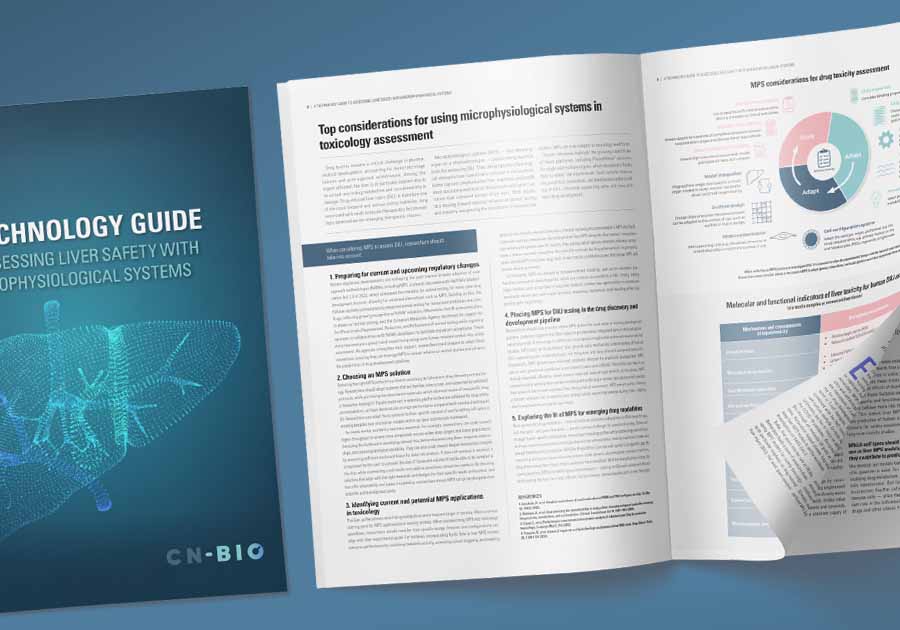
A technology guide to assessing liver safety with microphysiological systems
Download the free eBook
Filed under: DILI, Immune-mediated liver injury, and Safety toxicology
Video content if present
What a liver MPS can tell you, when to use it, and how to build confidence in the data
Assessing liver safety is one of the most consequential decisions in preclinical drug development. Drug-induced liver injury (DILI) remains a serious safety liability associated with late-stage failure and post-approval withdrawal. Complex, delayed, and immune-mediated effects can be particularly difficult to identify using conventional models that lack sustained metabolic function, physiologically relevant exposure, or immune components.
Liver microphysiological systems (MPS), also known as liver-on-a-chip models, provide a more human-relevant environment in which to investigate DILI risk. By incorporating fluidic flow and engineered tissue microenvironments, liver MPS can help sustain hepatocyte function and metabolic activity over extended culture periods. Depending on the research question, models may combine primary human hepatocytes with Kupffer cells or other supporting cell types, enabling repeat-dose studies and the investigation of metabolic, inflammatory and other mechanistically complex responses.
Interest in these technologies is increasing as regulators and industry seek to reduce reliance on animal testing and expand the use of new approach methodologies (NAMs). However, the suitability of an MPS depends on the biological question, platform design, cell configuration, analytical endpoints and the evidence supporting its performance.
This technology guide is designed to support researchers deciding whether, where, and how liver MPS could strengthen their approach to assessing liver safety.
What it covers
- The evolving regulatory landscape: Understand how recent regulatory initiatives, roadmaps and programs are supporting the evaluation and adoption of NAMs, including liver MPS.
- How to select an appropriate liver MPS: Consider platform materials, chip design, flow configuration, cell source, model complexity, ease of adoption and evidence of performance.
- Matching the model to the research question: Explore when a hepatocyte-focused model may be appropriate and when Kupffer cells, endothelial cells, stellate cells or circulating immune cells may be needed to investigate more complex mechanisms.
- Where liver MPS can add value: Examine applications across lead optimization, preclinical development, cross-species translation and the investigation of liver safety signals arising during clinical development.
- Endpoints for assessing liver safety: Review functional, injury and mechanistic measurements, including albumin and urea production; alanine aminotransferase, aspartate aminotransferase, glutamate dehydrogenase and lactate dehydrogenase release; bile acid production and transport; inflammatory mediators; oxidative stress; mitochondrial function; and transcriptomic or proteomic analyses.
- Applications beyond intrinsic DILI: Consider how liver MPS may support the investigation of toxic metabolite formation, cholestasis, immune-mediated injury, steatosis, mitochondrial dysfunction and toxicity involving multiple organs.
- Practical implementation considerations: Evaluate donor variability, throughput, recoverable media and tissue volumes, scalability, operating requirements and cost when determining whether a model is suitable for its intended context of use.
Who it is for?
This guide is intended for toxicologists, drug safety scientists, preclinical development leads and researchers developing NAM strategies who need to determine whether liver MPS can provide decision-relevant evidence for their programs.
Explore related products and applications
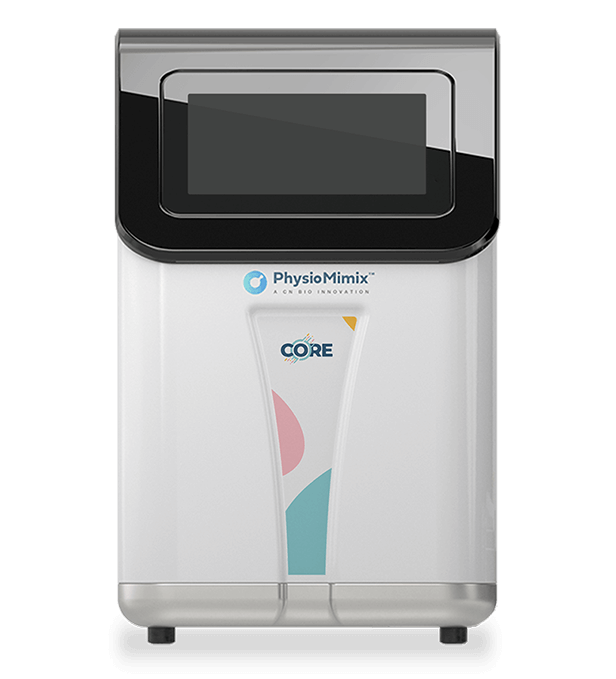
- The PhysioMimix® Core microphysiological system
- PhysioMimix Multi-chip Liver plates
- The PhysioMimix Drug-induced liver injury assay
- The PhysioMimix Immune-mediated liver injury assay
- PhysioMimix Liver-on-a-chip models
- Other DILI-related resources
Get started quickly with our DILI contract research service
