




• Skip to main content
  • Skip to footer
3Rs Collaborative-lead project with FDA
  • About us
  • News
  • Events
  • Careers
cn-bio-organ-on-a-chip-logo
  • Products
    • PhysioMimix® Core Microphysiological System
    • Consumables
      • PhysioMimix® Multi-chip plates
      • 3D validated cells
      • NASH-in-a-box
    • Organ-on-a-chip models
    • Gut/Liver-on-a-chip
    • Lung-on-a-chip
    • Support packages
  • Applications
    • Disease modeling
    • Safety toxicology
    • ADME
  • Services
    • Non-Alcoholic Steatohepatitis
    • Drug-Induced Liver Injury
    • ADME
  • Technology
  • Resources
  • Company
    • About us
    • Events
    • News
    • Careers in Biotech
  • Contact us

Explore our solutions


PhysioMimix® is a suite of hardware, consumables and assay protocols that enable you to recreate complex human biology and accurately predict human drug responses.

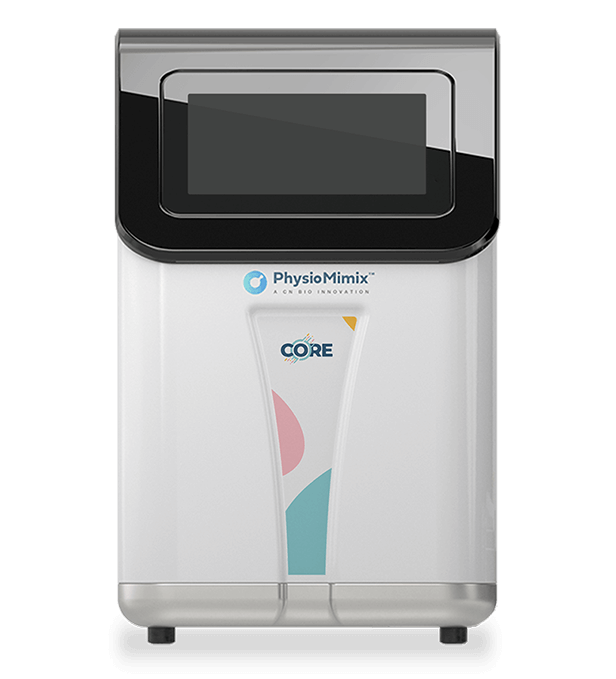
PhysioMimix Core

cnb1476_physiomimix-core_mark_mocks_system_v2
Learn more

Consumables

Multi-chip plates
3D validated cells
NASH-in-a-box
Learn more

Models

Single-organ models
- Liver-on-a-chip model
- Lung-on-a-chip model
Multi-organ models
- Gut/Liver-on-a-chip models

Support packages

PhysioMimix® support packages

Discover the applications


Investigate the validated core application areas that our PhysioMimix® products and services support

Learn more

Disease modeling

Metabolic dysfunction-associated steatohepatitis
Hepatitis B
Pulmonary infection
Learn more

Safety toxicology

Drug-induced liver injury
Immune-mediated liver injury
Learn more

ADME

Drug absorption
Drug metabolism
Drug bioavailability
Oligonucleotide delivery
Learn more

Studies as a service


Our team will work collaboratively with you to design a study around your research goals and generate actionable data within weeks

Learn more
icon-nash-1-150x150.png MASLD/MASH
icon-dili-tox-150x150.png Drug-induced liver injury
icon-adme-150x150.png ADME

Dynamic Culture Improves the Predictive Power of Bronchial and Alveolar Airway Models of SARS‑CoV‑2 Infection

January 6, 2026

Resource > Scientific publications >

Dynamic Culture Improves the Predictive Power of Bronchial and Alveolar Airway Models of SARS‑CoV‑2 Infection

Filed under: Disease modeling and Pulmonary infection
cnb1555 dynamic culture improves the predictive power resource tmb v1 | Bronchial and Alveolar airway models
Read the full preprint

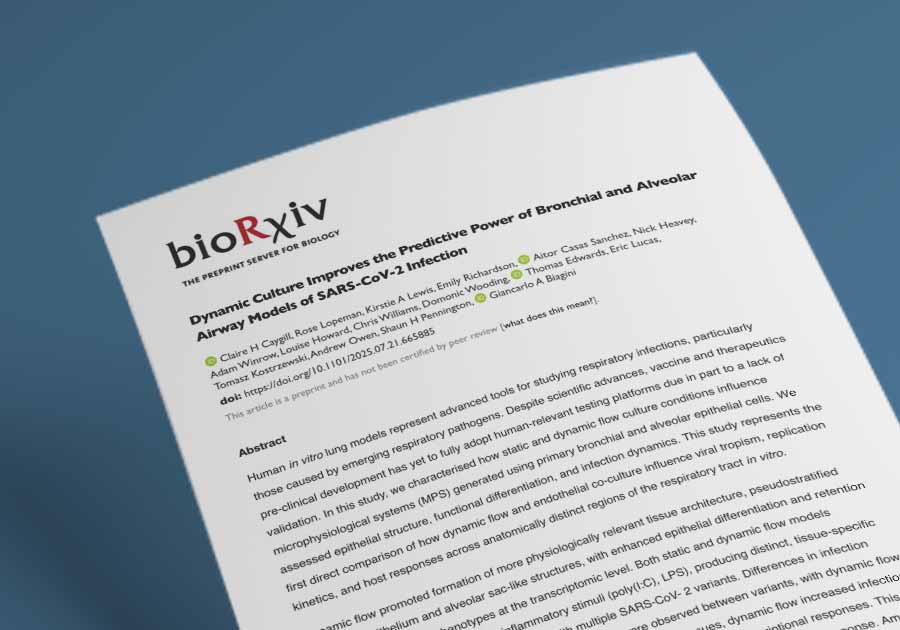
Discover how dynamic microfluidic flow culture improves the predictive power of in vitro lung models in this publication by Caygill et al., (2025), PhysioMimix users at Liverpool School of Tropical Medicine.

Their study describes the use of perfused primary human alveolar and bronchial lung microphysiological systems for more human-relevant exploration of SARS‑CoV‑2 infection.

Read the Preprint on bioRxiv

Why This Research Matters

Human-relevant lung models

Their manuscript provides a direct comparison of static versus dynamic flow microphysiological systems (MPS) comprised of primary bronchial and alveolar epithelial cells to model different regions of the respiratory tract.

Enhanced tissue architecture

Dynamic flow is proven to promote the development of pseudostratified bronchial epithelium and alveolar sac‑like structures with improved differentiation and region-specific gene expression.

Better infection and immune modeling

Advanced in vitro lung microphysiological systems support infection by multiple SARS‑CoV‑2 variants and reveal variant-specific differences in viral tropism, replication, and cytokine responses.

Key Highlights

  • Direct comparison of static and dynamic culture methods across bronchial vs. alveolar compartments
  • Dynamic flow enhances reproducibility, sensitivity, and detection of host interferon signaling in alveolar-infection models
  • Variant insights: Delta variant causes most tissue damage and strongest transcriptional response; Omicron BA.5 shows higher infectivity in alveolar tissues

What You’ll Learn

  • The benefits of microphysiological systems (MPS) over static 2D cultures in respiratory virus research
  • How dynamic flow culture enhances tissue maturity and host immune responsiveness
  • The importance of genetically distinct SARS‑CoV‑2 variant modeling for preclinical testing

Why You Should Read It

  • If you’re involved in drug discovery, vaccine development, or modeling respiratory disease, this study demonstrates how dynamic flow lung-on-chip models deliver more predictive virology insights.
  • Discover how to stay ahead of the curve by exploring how advanced culture methods can accelerate evaluation of emerging respiratory pathogens.
  • Learn practical approaches to modeling respiratory infections in region-specific lung tissues—key for translational research applications.

Read the full preprint

Dynamic Culture Improves the Predictive Power of Bronchial and Alveolar Airway Models of SARS‑CoV‑2 Infection — published by CayGill et al., (2025) on bioRxiv, DOI: 10.1101/2025.07.21.665885


Learn more about PhysioMimix lung-on-a-chip models

Learn more about using PhysioMimix Core for pulmonary infection

Learn more about the PhysioMimix Core microphysiological system

Read the full preprint

Speak to our experts

Request a meeting with one of our OOC experts to see how our products and services can support your studies

Request a meeting

Footer

CN Bio logo

332 Cambridge Science Park, Milton Road
Cambridge, CB4 0WN

UK: +44 (0) 1223 737 941

US: +1 415 523 4005

Privacy | Cookies | Regulatory | Accessibility
Website terms | Terms of sale

Product Recycling

©2025 CN Bio Innovations Ltd
Registered No. ‍06517359. VAT No. GB978184563

Latest news

  • Taking organoids to the next level January 14, 2026
  • UK plans to phase out animal testing faster in favor of alternative methods November 11, 2025
  • CN Bio launches all-in-one Organ-on-a-chip system, PhysioMimix® Core October 14, 2025
Cyber Essentials Logo