




Resource > Articles >
Bridging the translational gap with human-relevant ADMET
How New Approach Methodologies and Organ-on-a-Chip Technology Are Redefining Drug Development
Filed under: ADME, DILI, Drug bioavailability, Drug metabolism, and Safety toxicology
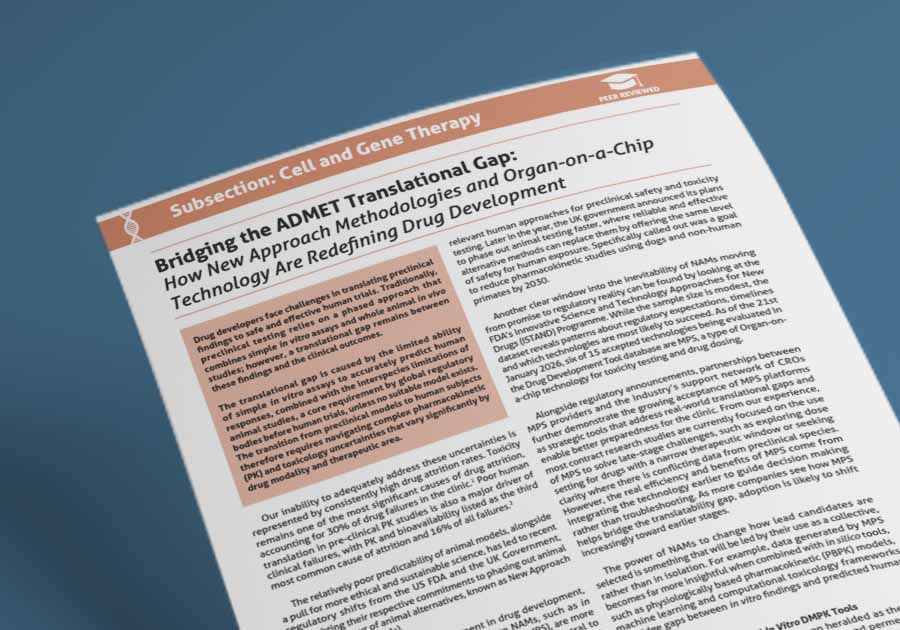
“Bridging the ADMET Translational Gap: How New Approach Methodologies and Organ-on-a-Chip Technology Are Redefining Drug Development”, explores how NAMs can be utilized to support earlier pipeline decision-making, build confidence in lead candidates and predict a translatable first-in-human dose.
It asks the question, why do so many promising drug candidates still fail in the clinic – and what can be done differently?
Despite decades of progress, drug developers continue to face a persistent translational gap between preclinical data and human outcomes. Toxicity, pharmacokinetics, and bioavailability remain leading causes of clinical attrition, even after years of extensive in vitro and animal testing.
In this in depth expert article, Dr. Yassen Abbas, Group Leader CN Bio explores how New Approach Methodologies (NAMs), including Organ-on-a-chip (OOC) technology (also known as microphysiological systems (MPS) are redefining drug development with human-relevant ADMET profiling to bridge the translational gap.
👉 Read the full article published in the peer-reviewed International Biopharmaceutical Industry (IBI) Journal, Spring 2026 edition to understand how NAMs are moving from promise to regulatory reality.
What you’ll learn from this article
This article goes beyond high-level advocacy and dives into how NAMs are currently being used to close real translational gaps in ADMET and safety science.
We explore:
- Why traditional in vitro and animal models struggle to predict human PK, bioavailability, and liver toxicity
- How recent FDA and UK regulatory signals are accelerating the shift away from animal testing toward validated NAMs
- How MPS platforms are already being accepted within regulatory innovation programs such as ISTAND
- Why advanced Liver MPS outperform standard 2D/3D cultures for detecting complex and latent DILI mechanisms, including cholestatic risk

Dr. Yassen Abbas
Biology Group Leader
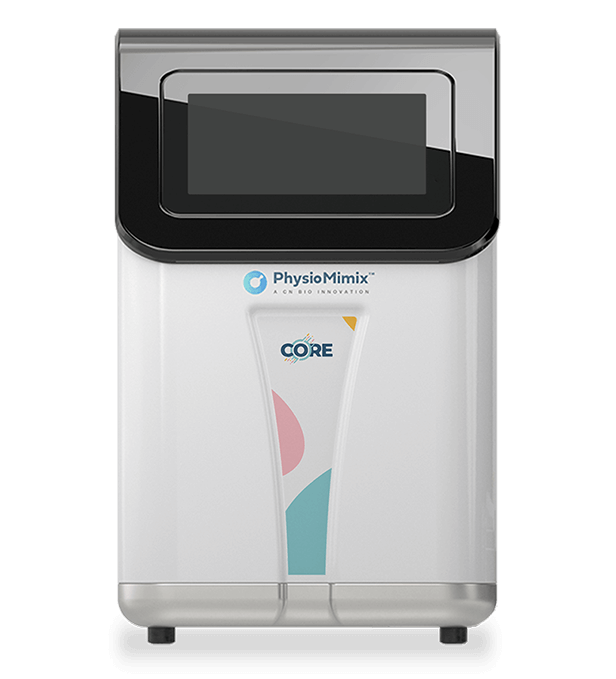
Find out more about how PhysioMimix® Core de-risks decision-making by generating human mechanistic insight in ADME and Safety Toxicology applications on our dedicated webpages.
Further reading: A Guide to Choosing the Right In Vitro Liver Models for Drug Development Tasks