




It’s been a landmark two weeks for the industry. The US FDA and the UK MHRA have taken monumental steps to reduce regulatory uncertainty, one of the biggest barriers to the adoption of Non-animal Methods, also known as New Approach Methodologies (NAMs).
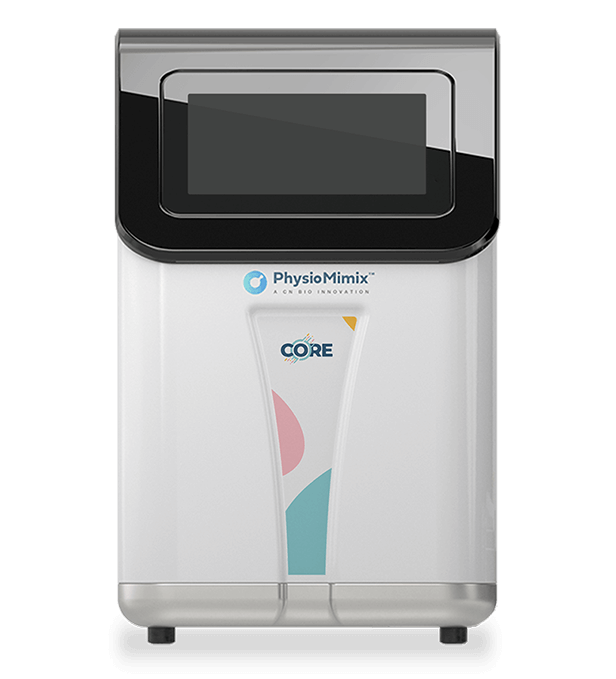
In this news post, we discuss how recent MHRA and FDA non-animal drug development guidance aligns. We show how the human-relevant, mechanistic data from CN Bio’s PhysioMimix® Core microphysiological system fits their needs in modern drug development.
How has regulatory uncertainty around the use of non-animal methods been addressed?
NAMs, including microphysiological systems (MPS), also known as Organ-on-a‑chip, are increasingly being used as a tool to generate robust, mechanistic data that can inform safety and efficacy decisions. Up until now, we’ve been missing clear guidance on what regulators expect from sponsors when they integrate NAMs into drug development and submission packages. There hasn’t been a solid framework for how or when regulators are prepared to engage with that kind of data.
Last week, the US FDA released draft guidelines, with four pillars to consider when integrating NAMs into drug development and regulatory submission packages. The goal is to “improve predictive toxicology in humans and move away from reliance on animal testing”.
On the 25th of March, the MHRA announced guidance on the assessment of applications for medicines that use alternative methods to replace animals in science. They are offering an early review of non-animal data and clarifying regulatory principles for when animal testing may or may not be required.
The regulators have different approaches, but with a clear common strategic direction:
- The FDA guidance sets out the principles by which NAMs are evaluated within a weight-of‑evidence framework. In other words, it gives sponsors the tools to justify using these alternatives without specifying specific scenarios where they might apply.
- In contrast, the MHRA guidance provides a consolidated document with guidance on the use of non-animal methods for specific example scenarios in medicines development. They demonstrate the approach the MHRA may take when considering applications that include, or omit, animal studies.
Human‑relevant evidence that the regulators expect
Both the FDA and MHRA emphasize that regulatory decisions should be based on all the non‑clinical evidence and how it is relevant to human safety, exposure, and clinical context, rather than defaulting to the use of animal models without scientific justification.
Application of MPS, such PhysioMimix® Core, support this evidence-based approach by delivering:
- Human-relevant biology for greater confidence when translated to the clinic
- Mechanistic insight into drug safety and efficacy
- Quantitative data to inform dose, exposure, and treatment duration decisions
Together, these enable drug developers to build non‑clinical data packages suitable for global regulatory applications. Please view our Application Notes collection to find more examples of how MPS can be applied across a range of different contexts of use.
Supporting scientifically justified reduction of animal testing with non-animal methods
Both the US FDA and the MHRA now explicitly encourage the use of advanced non-animal methods, including MPS, complex in vitro models and in silico approaches. They expected data from these approaches to be submitted alongside animal studies, to create a broad weight of evidence approach to make decisions about specific drug development programs.
Download our Application Note: Enhanced IVIVE with cross-species Liver MPS DILI assays, which supports human and animal NAMs use in a scientifically justified way.
Both regulators also recognize that animal models may be poorly predictive or scientifically inappropriate for certain (highly human-specific) drug modalities, including peptides, monoclonal antibodies, advanced and complex therapeutic modalities like siRNA or cell and gene-based therapies.
A relevant example in this area is our Oligonucleotide delivery assay, which was used by Major et al., 2024 to compare the uptake of non-targeted antisense oligonucleotides (ASO) and GalNAc-ASOs to determine the biological effects of these ASOs in different cell types of the liver.
CN Bio is also addressing another key unmet need: evaluating immune-mediated hepatotoxicity associated with new therapeutic modalities. By integrating human peripheral blood mononuclear cells into an FDA‑recognized liver MPS DILI assay, we have developed an immune-competent platform to capture human-specific inflammatory and immune-driven liver injury mechanisms that are poorly predicted by animal models. The proof-of-concept studies presented in this poster use clinically relevant antibodies to demonstrate the detection of immune-mediated hepatotoxicity, along with cytokine-driven responses that align with clinical observations.
Explore our immune-mediated liver injury assay to find out more
Explore our human DILI assay to find out how to generate exposure‑response and mechanistic liver safety data from repeated‑dose studies in a human‑relevant Liver MPS.
Providing data to inform first-in-human dose setting for orally administered drugs
Regulators expect non-clinical data to support dose selection and dose-exposure responses by demonstrating how a drug is absorbed, metabolized, and cleared in humans. Understanding bioavailability and first‑pass metabolism is therefore a critical part of regulatory pharmacokinetic (PK) assessment. However, it can be poorly predicted by animals, particularly for compounds with more complex chemical structures, larger molecules and peptides.
CN Bio’s integrated PhysioMimix® Gut/Liver model is designed to support this need by enabling the human-relevant assessment of oral bioavailability. Both the FDA and MHRA emphasize the importance of human-relevant PK data as a priority for reducing animal use with NAMs. Our assay supports a weight-of-evidence justification when animal data conflict, reducing uncertainty when informing first-in-human dose setting. Alternatively, it can be used to design better in vivo animal studies to reduce the number of animals required.
Read our Abbas et al., 2025 publication demonstrating use of a Gut/Liver microphysiological system and in silico tools to more accurately estimate PK parameters
More than discovery – built for regulatory confidence
For more than a decade, CN Bio has worked with drug developers and global regulatory agencies to ensure that the MPS data it generates is scientifically robust and reproducible and importantly, is focused on a specific context of use. By taking this approach, it means the data generated from our PhysioMimix Core platform is already suitable for use in regulatory submissions.
By using predictive in vitro human organ models, PhysioMimix® Core accurately mimics human physiology in the laboratory, offering unique insights into how drugs will perform in patients. The mechanistic data generated on the platform support safety, efficacy, and pharmacokinetics, contributing to supporting a strong pipeline of regulatory filings, including a world-first for the treatment of metabolic liver disease. The technology is being used by 16 of the world’s leading pharmaceutical companies to make key development decisions regularly, and is recognized by the US FDA. Work between CN Bio and the FDA led to the first peer-reviewed co-publication between a drug regulator and MPS provider, and the technology has recently been accepted into the FDA’s ISTAND program.
Summary:
So, do MHRA and FDA expectations on non-animal methods align? Although the regulators differ in how they present their expectations, the MHRA’s scenario-specific example guidance complements the FDA’s weight-of-evidence approach. Both emphasize the same outcome of better-informed decisions based upon robust, human-relevant mechanistic evidence with a clearly defined context of use, rather than animal models as a default. Whilst there is not a complete resolution of regulatory uncertainty, a meaningful step towards clarity has been taken. Alignment is emerging in a practical and meaningful way. For sponsors, this provides a much clearer framework for how to integrate MPS data into nonclinical packages with greater confidence.
Contact us to discuss how we can navigate change together.
FAQs
Q: Do the FDA and MHRA accept microphysiological systems and organ‑on‑a‑chip data?
Both regulators recognize microphysiological systems as scientifically credible non‑animal methods when they are robust, human‑relevant, and appropriate for the safety question being addressed.
Q: Can non‑animal methods be used instead of animal studies?
FDA and MHRA assess submissions based on the totality of evidence. Non‑animal methods may be used alongside or in some cases instead of animal studies when they adequately support human safety.
Q: Are PhysioMimix® Core data suitable for global regulatory programs?
PhysioMimix® Core systems generate human‑relevant, mechanistic data designed to support regulatory decision‑making across both US and UK development pathways.