




I, (Dr. Tomasz Kostrweski, CSO, CN Bio) recently had the pleasure of attending the 13th World Congress on Alternatives and Animal Use in the Life Sciences (WC13) in the vibrant city of Rio de Janeiro. This event brought together leaders from academia, industry, government, and non-profit sectors to discuss and advance the 3Rs — reduce, refine, and replace the use of animals in life sciences.
The Essence of WC13: Pioneering Ethical Science and Innovation
The WC13 conference was a significant event for those dedicated to advancing ethical and innovative scientific practices. The main theme of the conference – 3Rs Integrating 3 Worlds: Human, Animal, and Environmental Health, underscored the interconnectedness of these three domains and the importance of developing new approach methodologies (NAMs), such as microphysiological systems (MPS), to improve scientific outcomes while reducing reliance on animal testing.
Key Takeaways and Observations
The most prominent takeaway was the consensus that the adoption of NAMs and MPS is no longer a question of “if” but rather “how fast.” These technologies are being developed and adopted broadly across the pharmaceutical, chemical, and cosmetic industries, making a significant impact on how we test and develop new drugs and chemicals.
The Environmental Protection Agency (EPA) and the FDA are now promoting the development and rapid adoption of NAMs to support the transition away from vertebrate animal testing, further emphasizing the urgency and importance of this shift. CN Bio, too, has long championed this shift, highlighting the transformative potential of Organ-on-a-chip (OOC) technology, another name for MPS, to deliver more physiologically relevant preclinical data that enhances in vitro to in vivo estimations (IVIVE) – which ultimately helps pharma companies to bring therapeutics to patients faster and at a lower cost. However, some essential changes need to take place before widespread adoption, and an end to large-scale animal testing, is feasible
I was particularly keen on the discussion around the use of artificial intelligence (AI) in combination with in vitro models. Prof. Thomas Hartung, Director of Johns Hopkins University’s Center for Alternatives to Animal Testing (CAAT), delivered a compelling presentation on how AI tools, when integrated with in vitro models such as OOC, have the potential to predict toxic responses more accurately than current approaches. This integration represents the next frontier for experimental human biology.
The importance of quality and standards was also highlighted throughout the conference. The use of quality standards is essential to drive the best science in all in vitro experiments. Amanda Ulrey from the Institute for In Vitro Sciences (IIVS) emphasized the significance of guidelines such as Good In Vitro Method Practices (GIVIMP), which align with OECD requirements for detailed validation of any NAM assay and build upon Good Laboratory Practice (GLP) and Good Cell Culture Practice (GCCP) standards.
Momentum Behind New Approach Methodologies Adoption
The closing keynote by Dr. Nicole Kleinstreuer, Director of the National Toxicology Program’s Interagency Center for the Evaluation of Alternative Toxicological Methods (NICEATM) and the Interagency Coordinating Committee on the Validation of Alternative Methods (ICCVAM) at the National Institutes of Health (NIH), underscored the momentum behind NAMs. She highlighted recent announcements from the FDA and NIH, making it clear how shifts in these organizations, alongside funding for NAM-based technologies, will drive the global uptick in their use.
Central to this momentum, is the establishment of the Complement-ARIE program, and the NIH Common Fund program, which was launched to accelerate the development, standardization, validation, and deployment of NAMs. This initiative includes Technology Development Centers to build advanced NAM platforms, a NAMs Data Hub & Coordinating Center for FAIR data and model credibility, and a Validation and Qualification Network (VQN), a public-private collaboration that will define validation frameworks, reporting standards, and quality systems for regulatory acceptance.
A Vision for the Future
Nicole Kleinstreuer and other presenters from the EU Commission highlighted the vision of a One Health learning loop of prevention, protection, and progress, supported by data-driven personalisation, and the rapid development of next-generation therapeutics. This vision aligns with the broader goals of the WC13 conference and the ongoing efforts to integrate human, animal, and environmental health.
Contributions from CN Bio
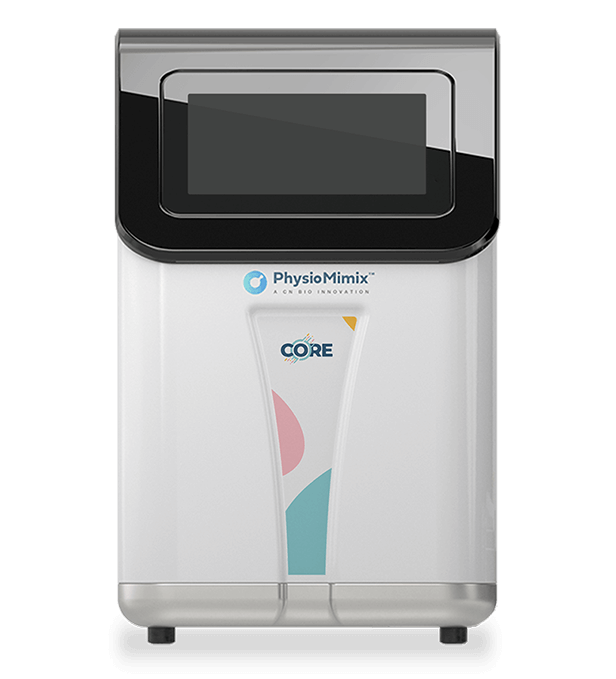
During the event, I had the opportunity to address attendees in two separate sessions, discussing the collaborative projects we have been working on with different industry partners. I highlighted the work we completed with the US FDA on qualifying the PhysioMimix Liver MPS model (commonly known as Liver-on-a-chip), which resulted in the first joint publication by an OOC developer and regulator, recognizing the enhanced ability of the PhysioMimix System to deliver more physiologically relevant insights when compared to traditional approaches. I also walked attendees through the journey we took developing and optimizing our fully humanized Gut/Liver dual-organ model, which was created in collaboration with Altis Biosystems.
On the final day of the conference, I presented a detailed insight into the ongoing work of the 3RsC FDA consortium to validate Complex In Vitro Models (CIVMs), focusing on the use of the PhysioMimix Liver-MPS models, for assessing Drug induced liver injury (DILI). This effort is a crucial step towards creating a standardized framework for future validation of other advanced in vitro models. The data generated from this project has already been submitted to the FDA’s iSTAND program and is being considered for further detailed validation.
Closing Remarks
Attending the WC13 conference in Rio de Janeiro was an enriching experience that reinforced the importance of advancing ethical and innovative scientific practices. The insights gained from the conference will undoubtedly inform our ongoing efforts at CN Bio to develop and validate novel microphysiological systems and associated assays. As we continue to push the boundaries of scientific innovation, events like WC13 serve as a reminder of the collective commitment to reducing, refining, and replacing the use of animals in life sciences.

Dr. Tomasz Kostrzewski
Chief Scientific Officer
Dr. Kostrzewski has successfully led numerous grant-funded collaborative projects at CN Bio and currently serves as the project lead for a high-profile partnership between CN Bio and the FDA. Over the past five years, he has published more than a dozen peer-reviewed scientific publications and has filed multiple patent applications.