

Resource > Scientific publications >
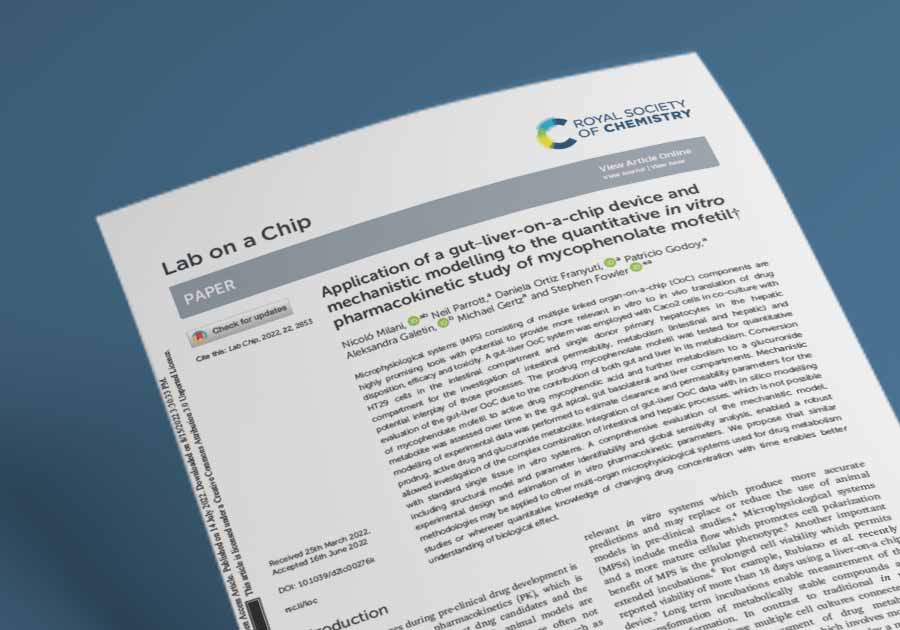
Application of a gut-liver-on-a-chip device and mechanistic modelling to the quantitative in vitro pharmacokinetic study of mycophenolate mofetil
Filed under: ADME, Drug absorption, and Drug metabolism
Summary
This study used the CN Bio PhysioMimix® gut-liver-on-a-chip to measure the pharmacokinetics of the prodrug mycophenolate mofetil in a two-organ microphysiological system (MPS) that combined a Caco2 and HT29 intestinal co-culture with single-donor primary human hepatocytes. The researchers tracked conversion of mycophenolate mofetil to its active drug mycophenolic acid (MPA) and its inactive metabolite mycophenolic acid glucuronide (MPAG) across the apical, basolateral, and liver compartments over 48 hours, then fitted the concentration data with a mechanistic in silico model to estimate clearance, permeability, and efflux parameters. Both gut and liver contributed to MPA glucuronidation, and the individual organ contributions combined additively, a relationship that single-tissue in vitro systems cannot resolve.
Study facts at a glance
| Publication | Nicoló Milani, Neil Parrott, Daniela Ortiz Franyuti, Patricio Godoy, Aleksandra Galetin, Michael Gertz, Stephen Fowler. Application of a gut-liver-on-a-chip device and mechanistic modelling to the quantitative in vitro pharmacokinetic study of mycophenolate mofetil. Lab on a Chip. 14 July 2022. Volume 22, pages 2853-2868. |
| DOI | 10.1039/d2lc00276k |
| CN Bio product used | PhysioMimix® gut-liver-on-a-chip |
| How the platform was used | The prototype linked an intestinal compartment holding a Caco2 and HT29 co-culture in a 6.5 mm transwell (0.33 cm² membrane, separate apical and basolateral sides) to a liver compartment seeded with single-donor primary human hepatocytes, using interconnection, gut basolateral, and liver flow circuits set at 90, 60, and 90 μL min⁻¹; mycophenolate mofetil was dosed at 10 μM into the apical side and sampled across compartments over 48 hours. |
| Biological context | Two-organ gut-liver microphysiological system (MPS) modeling intestinal and hepatic drug metabolism. Intestinal tissue: human Caco2 and HT29 colorectal carcinoma cell co-culture. Hepatic tissue: single-donor primary human hepatocytes. Healthy metabolic context, applied to prodrug ADME rather than a disease model. |
| Comparator | Gut-only and liver-only single-tissue configurations run in parallel, plus a cell-free media control for non-enzymatic prodrug hydrolysis. |
| Key readouts | Time-resolved liquid chromatography tandem mass spectrometry (LC-MS/MS) concentrations of mycophenolate mofetil, mycophenolic acid (MPA), and mycophenolic acid glucuronide (MPAG) in the apical, basolateral, and liver compartments; transepithelial electrical resistance (TEER) for barrier integrity; end-of-experiment cell counts; and mechanistically modeled clearance, permeability, and efflux ratio parameters. |
| Main interpretation | The gut-liver-on-a-chip, paired with mechanistic in silico modeling, resolved the separate intestinal and hepatic contributions to mycophenolate mofetil metabolism and produced quantitative pharmacokinetic parameters that single-tissue in vitro systems cannot generate. |
Table of Contents
Which CN Bio product was used?
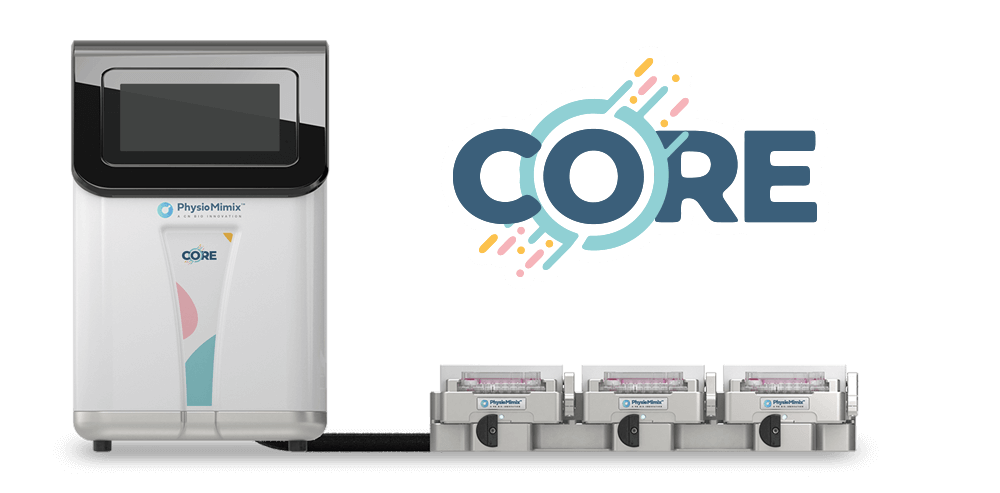
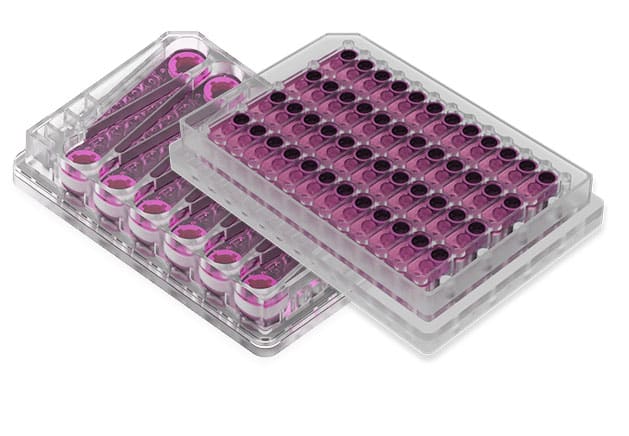
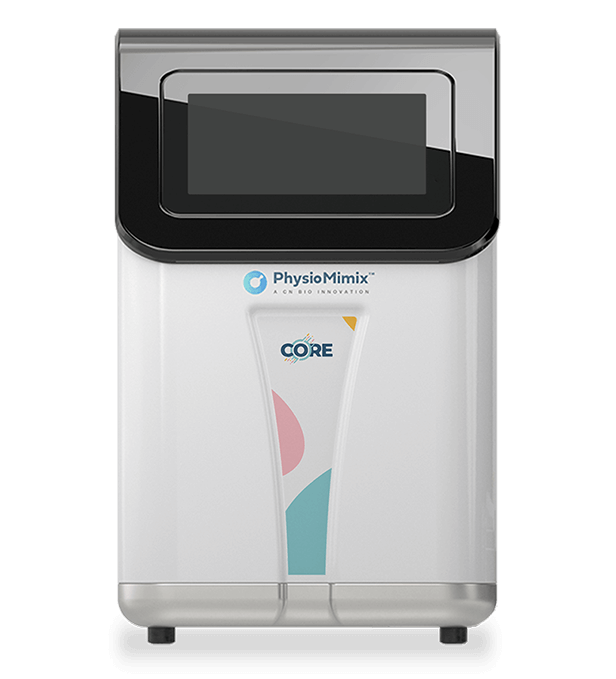
The work used a prototype PhysioMimix gut-liver-on-a-chip supplied by CN Bio Innovations (Cambridge, UK). The device built on the previously characterized PhysioMimix liver-on-a-chip by adding an intestinal compartment. Its controller, docking station, and drivers regulated pneumatic media flow, and the six-chamber TL6 consumable plate held the cultures. Each chamber paired a gut compartment, split into apical and basolateral sides by a 6.5 mm transwell, with a liver compartment where hepatocytes were seeded on a perforated scaffold. Three independent flow circuits (gut basolateral, liver, and an interconnection flow linking the two) drove media through the system. The platform was central to the study: it provided the physical two-organ model in which prodrug conversion and metabolite formation were measured, while LC-MS/MS quantified the compounds and separate in silico modeling estimated the pharmacokinetic parameters. CN Bio’s current gut-liver model runs on the PhysioMimix Core organ-on-a-chip platform.
What this paper is about
Predicting human pharmacokinetics before clinical trials is difficult because simple in vitro systems, such as liver microsomes or suspended hepatocytes, do not reproduce the coordinated handling of a drug by more than one tissue, and animal models often fail to predict human outcomes. Prodrugs that depend on both intestinal and hepatic metabolism are a particular challenge, since no single-tissue assay captures the interplay between the two organs. The authors addressed this gap with a gut-liver organ-on-a-chip (OoC) that connects an intestinal barrier tissue to a hepatocyte culture through media flow. They chose mycophenolate mofetil because it is activated and further metabolized in both gut and liver, producing a small set of well-characterized metabolites (MPA and MPAG) for which reference standards exist. To separate the organ contributions, they ran the full gut-liver system alongside gut-only and liver-only configurations, then applied mechanistic modeling to convert the measured concentration profiles into clearance, permeability, and efflux parameters that could support in vitro to in vivo extrapolation (IVIVE).
What the researchers found
Mycophenolate mofetil was hydrolyzed rapidly in the intestinal compartment. Only about 5% of the dosed prodrug remained in the apical side after 2 hours, and the prodrug never reached measurable levels on the basolateral side (below 2 nM), consistent with fast carboxylesterase-mediated conversion inside the Caco2 and HT29 cells. A cell-free control showed only slow non-enzymatic breakdown (around 85% of the prodrug remaining after 5 hours), confirming that the cells drove the hydrolysis.
The active drug MPA was then glucuronidated to MPAG in both the intestinal and hepatic cells. In the gut-liver system, MPA was completely converted to MPAG by 48 hours. Comparing the gut-only and gut-liver systems isolated the role of each tissue: in the gut-only configuration, unconjugated MPA was still present at 48 hours (around 0.2 μM, roughly 20% of the dosed prodrug), whereas adding hepatocytes cleared it fully. This showed that gut metabolism makes a real contribution to MPA glucuronidation on top of the hepatic contribution, in line with in vivo reports.
Mechanistic modeling produced quantitative pharmacokinetic parameters per million cells. Intestinal clearance of the prodrug was about 13 μL min⁻¹ per 10⁶ cells, while hepatic clearance of the prodrug from the liver-only system was about 643 μL min⁻¹ per 10⁶ cells, roughly 50-fold higher. Intestinal and hepatic clearance of MPA were similar, at about 24 and 26 μL min⁻¹ per 10⁶ cells. The estimated cell membrane permeability of MPA was about 688 nm s⁻¹, more than 1000-fold higher than that of the more polar glucuronide MPAG (about 0.37 nm s⁻¹). The model also estimated intestinal efflux ratios above 1 for both MPA (about 3.7) and MPAG (about 2.9), indicating active transport out of the cells toward the apical side, consistent with these compounds being substrates of efflux transporters such as P-glycoprotein and multidrug resistance-associated protein 2 (MRP2).
Simulation of the intestinal cell compartment, which could not be sampled directly, indicated that around 30% of MPAG was concentrated inside the intestinal cells near the 2 hour mark, reflecting fast formation followed by slow permeation out. Across the three systems, parameter values agreed within statistical uncertainty, and simultaneous fitting of all data reduced that uncertainty. The authors note that this additive behavior was specific to mycophenolate mofetil and should not be assumed for other compounds.
Barrier function held throughout: TEER fell from about 300 to about 180 Ω cm² but stayed well above the 70 Ω cm² threshold. Measured end-of-experiment cell numbers (about 0.45 million intestinal cells and about 0.34 million hepatocytes per well) were used to scale the clearance values, since seeding efficiency for the hepatocytes was only about 50%.
Why the paper matters
For teams building organ-on-a-chip assays, the paper shows how to turn multi-organ concentration data into pharmacokinetic parameters rather than stopping at qualitative metabolite profiles. Two points carry the most practical weight. First, the study measured actual cell numbers at the end of each run and used them to scale clearance, correcting a common shortcut in the field where the initial seeding number is assumed and quantitative extrapolation suffers. Second, running gut-only and liver-only systems next to the combined model let the authors attribute metabolism to the right tissue and check that the parts added up. The gut-liver OoC resolved the combined intestinal and hepatic handling of a prodrug in one experiment, which supports its use for prodrug ADME work and, in future, for drug-drug interaction risk assessment on drugs with complex in vivo behavior.
Key study takeaways
- The study used the CN Bio PhysioMimix gut-liver-on-a-chip to run a two-organ intestinal and hepatic model of prodrug metabolism.
- The model reproduced the qualitative metabolic pattern of mycophenolate mofetil, with rapid intestinal hydrolysis to MPA and glucuronidation to MPAG in both gut and liver.
- Compared with gut-only and liver-only configurations, the combined system completely converted MPA to MPAG by 48 hours, isolating the additive gut and liver contributions.
- The workflow combined LC-MS/MS concentration profiles, TEER barrier checks, end-of-experiment cell counts, and mechanistic in silico modeling.
- The findings support using gut-liver OoC models with mechanistic modeling to estimate clearance, permeability, and efflux parameters for orally dosed prodrugs.
- The paper indicates the model is most appropriate when actual cell numbers are measured and when the additive behavior of gut and liver metabolism is verified per compound rather than assumed.
Why this paper is worth reading
This paper is useful because it lays out a working method, not just a result. It pairs a two-organ chip with a documented modeling and sampling strategy, including parameter identifiability and global sensitivity analysis, so a reader can see how to design a multi-organ pharmacokinetic experiment and extract parameters that hold up. For anyone deciding whether an organ-on-a-chip can answer a quantitative ADME question about a prodrug, it provides a concrete example of what the system can measure, where its limits sit, and how to scale the data toward the whole-body situation.
FAQ
The study used a prototype CN Bio PhysioMimix gut-liver-on-a-chip, supplied with its controller, docking station, drivers, and six-chamber TL6 consumable plate by CN Bio Innovations.
The PhysioMimix gut-liver-on-a-chip linked a Caco2 and HT29 intestinal co-culture in a 6.5 mm transwell to single-donor primary human hepatocytes, with interconnection, gut basolateral, and liver flow circuits at 90, 60, and 90 μL min⁻¹. Mycophenolate mofetil was dosed at 10 μM into the apical side and sampled across compartments over 48 hours.
The model was a two-organ gut-liver microphysiological system representing intestinal and hepatic drug metabolism, using human Caco2 and HT29 intestinal cells and primary human hepatocytes. The focus was prodrug ADME and pharmacokinetics rather than a specific disease.
The main finding was that the gut-liver-on-a-chip, combined with mechanistic in silico modeling, could quantify the separate intestinal and hepatic contributions to mycophenolate mofetil metabolism and estimate clearance, permeability, and efflux parameters that single-tissue in vitro systems cannot produce.
The study compared the full gut-liver system with gut-only and liver-only configurations, and included a cell-free media control for non-enzymatic prodrug hydrolysis.
The readouts were LC-MS/MS concentrations of mycophenolate mofetil, MPA, and MPAG across the apical, basolateral, and liver compartments, TEER measurements of barrier integrity, end-of-experiment cell counts, and modeled clearance, permeability, and efflux ratio parameters.
The paper is useful because it provides a documented modeling and sampling strategy for turning multi-organ organ-on-a-chip data into pharmacokinetic parameters, with measured cell numbers used for in vitro to in vivo extrapolation. It supports the use of gut-liver OoC models for prodrug ADME and future drug-drug interaction studies.
Full citation
Related products and services
Contract research services
Discover how to utilize our cross-species models to inform next-step decision making via our DILI in vitro Contract Research Services here.
Add PhysioMimix Core in your lab
To develop your own cross-species Liver MPS models, you will need: