




Resource > Articles >
Organ-on-a-chip: The body in miniature
Interview with Dr. Paul Brooks, CEO
Filed under: Drug bioavailability and General OOC
In this interview, Dr. Paul Brooks, CEO of CN Bio, discusses how Organ-on-a-chip (OOC), also known as microphysiological systems (MPS), offer a modern and powerful solution for testing new therapies, to observe how humans respond to drugs in vitro, before first-in-human trials.
CN Bio is pioneering the development of MPS. These systems are transforming pharmaceutical research by providing a more accurate and ethical alternative to traditional in vitro models and animal testing. Dr. Brooks highlighted that despite advances in medicine, drug discovery still remains inefficient, with around 90% of drug candidates failing before or during clinical trials. Traditional in vitro models do not capture the complexity of human biology, while animal models often introduce physiological discrepancies and fail to predict human responses, leading to costly failures.
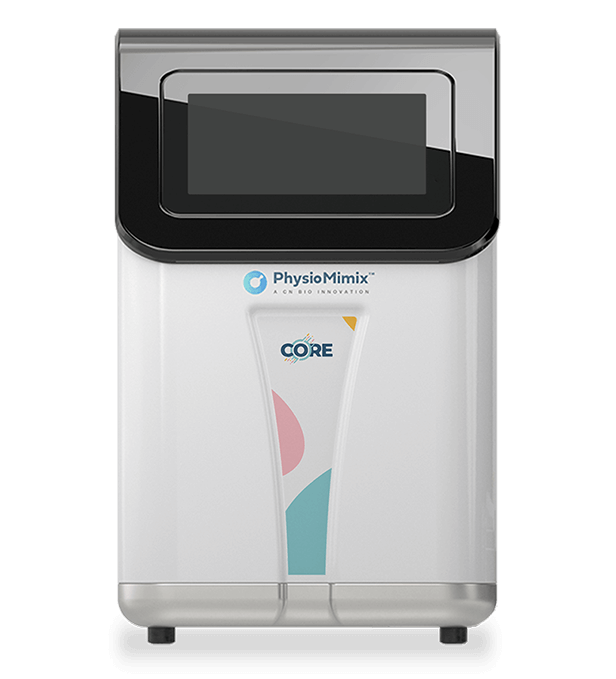
CN Bio’s PhysioMimix Core System addresses these challenges by creating 3D human organ tissues that recapitulate the organ’s microarchitecture, environment, and function. This allows scientists to study how humans would respond to new therapies, generating high-quality, predictive data.
“What we’ve created is a predictive model of how the human body responds,” Dr. Brooks says. “Our technology replaces flawed preclinical methods with systems that replicate organ function and deliver more reliable answers.”
This technology is already being used by major pharmaceutical companies, including 16 of the top 20 globally.
“They’ve seen how it fits seamlessly into their workflows,” Brooks notes. “We see repeat customers coming back, which tells us they’re getting real success with it. It’s proven, scalable technology they can plug directly into drug discovery.”
The data generated is of such high quality that customers have already used it in IND submissions to support new drugs entering clinical trials. Building on this momentum, CN Bio is now working directly with regulators to ensure data from its platform is fully recognised in the drug development process.
The company’s journey hasn’t been without challenges. When Brooks joined three years ago, he focused on restructuring the business, recruiting talent, and ensuring the technology could be commercialized effectively. CN Bio now employs a multidisciplinary team of scientists, engineers, and support staff, all united by a shared vision to move the industry away from outdated preclinical models.
As the pharmaceutical sector faces increasing pressure to reduce animal testing, CN Bio’s solutions are gaining traction. Regulatory bodies and AI-driven drug discovery platforms are converging on the need for better human data, positioning CN Bio at the forefront of this shift.
“The whole industry is on this journey,” Brooks says. “There have been many pushes to find alternatives. AI is one, but regulators like the FDA are also calling for the shift away from animal models. That’s where the consensus is forming, and that’s where we play a critical role.”
Looking ahead, the company aims to expand its platform’s applications and form new strategic partnerships, playing a pivotal role in the evolution of drug discovery and the broader healthcare ecosystem.
This interview was originally published in Business Focus, on the 1st of September 2025.

Dr. Paul Brooks
CEO