




Resource > Articles >
At the Core of Innovation: Organ on a chip Preclinical Testing
How preclinical testing in transformed with Organ-on-a-chip technology
Filed under: General OOC

Are you ready to transform preclinical testing with Organ-on-a-chip technology?
This article was originally published in Eurolab Winter/Spring 2025/2026 edition and has since been updated.
At the core of the FDA Modernisation Act 2.0 (2022) was the acceptance of data derived from New Approach Methodologies (NAMs), such as AI, in silico tools, and Organ-on-a-chip, into regulatory filings. At the core of their subsequent roadmap to reduce animal testing in 2025 is an actionable phased strategy to reduce, refine, and ultimately phase out routine preclinical safety testing in animal studies in favor of a NAMs-based approach by encouraging and incentivizing their use. Subsequently, the UK announced its plans to phase out animal testing faster, where reliable and effective alternative methods can replace them by offering the same level of safety for human exposure. Further global announcements are anticipated.
Since these announcements, funding initiatives across the US and Europe have arisen to build research facilities, set up universal standards, train, develop and accelerate the adoption of Organ-on-a-chip (OOC) technology – also known as microphysiological systems (MPS). With widening awareness that Organ-on-a-chip “does a better job” than traditional in vitro approaches, there’s no longer any doubt that the technology will become integral to drug discovery and development.
Companies that have embraced OOC technology have the early advantage. They utilize it to improve the efficiency of their workflows by addressing gaps where traditional in vitro assays are not physiologically relevant enough, but animal use is less suited due to inherent interspecies differences. Some have widely adopted the approach, others have dabbled, many are yet to get started. However, the field is gaining momentum!
If you ask AI what is at the core of Organ-on-a-chip (OOC) technology, it lists “microfluidics to perfuse cultures, 3D cell culture, dynamic mechanical cues and the integration of multiple cell types, enabling users to create lab-grown mimics of human organs and tissues that behave and respond to drugs, toxins, or disease in a way that is more physiologically relevant than traditional 2D cell culture or many animal models”.
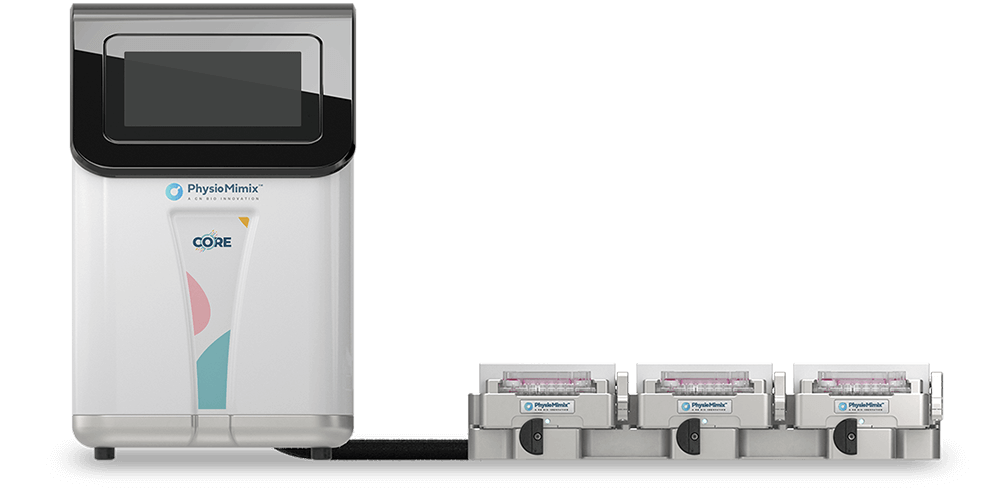
Whilst this is true, there are many OOC technologies available and each is different. When the time’s right to modernize your workflows with OOC, it is important to match each system’s core strengths to your needs before choosing. Incorporating any new approach into your workflow takes time, so choose a solution whose core design prioritizes ease of setup and use, helping you onboard quickly and sustain momentum.
Remember, the purpose of OOC is to enhance physiological relevance but OOC systems themselves don’t have to be prohibitively complex. They can be plate-based and familiar and utilize commonly used consumables such as Transwells® for an easy transition into perfused cell culture. So, before you commit, consider the following key criteria:
- Make sure that you are comfortable handling the consumables for assay setup and sample extraction.
- Ensure that the system is easy to program. Don’t waste valuable time on maintenance routines.
- More importantly, make sure you have adequate training and support to get on the right path. New researchers typically need 5–6 weeks to run experiments confidently using CN Bio’s PhysioMimix® Core.
“Using the PhysioMimix® OOC System is really straightforward; with a little practice, any tissue culture scientist can master the skills needed for Organ-on-a-chip.” – Deborah Lenart, MSc, Charles River
Access to highly characterized and validated assays is key to your initial success. Most vendors provide validated all-in-one assay or model kits, or protocols that enable new users to get to grips with OOC basics fast, but rarely does one size fit all. Therefore, to meet your immediate and future needs, another core element to consider is a system’s adaptability.
Experienced PhysioMimix customers benefit from its open architecture. For example:
- In a recent webinar, BMS described their work incorporating endothelial cells into a Drug-induced liver injury (DILI) assay, whilst scientists at Sanofi have presented their development of a fully immunocompetent DILI assay at conferences.
- Others have applied existing Liver-on-a-chip models to a different context of use (e.g. antisense oligonucleotide delivery at GSK1, progressive human hepatic insulin resistance MIT & Novo Nordisk collaboration2).
- Charles River utilized our core technology to design their own genotoxicity model and assay3
- Roche initially utilized a single-organ liver model for quantitative drug metabolism studies4 before progressing to a dual-organ gut/liver model to simulate the process of first pass metabolism in vitro5.

Webinar: Harnessing Liver-on-a-chip models for drug safety
Dr. Tomasz Kostrzewski, Dr. Emily Richardson and Dr. Dr. Rhiannon Hardwick (Bristol Myers Squibb) explores the use of OOC to improve IVIVE. Watch here
Futureproofing also relates to scalability and the cost of OOC experiments. Consider the throughput you will require once OOC becomes embedded as a core technology and ensure this can be met. Explore the cost per chip and options for cost reduction via miniaturization without compromising data integrity.
Ensure you can extract the widest range of endpoint analysis from each experiment to maximize value and remember, the benefits of perfused organ or tissue cultures can also be applied to more cost-effective cell types, such as iPSCs.
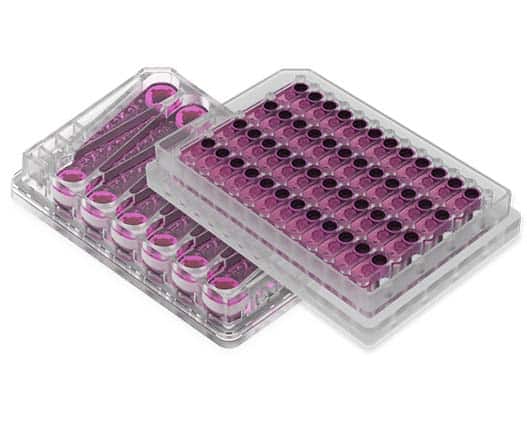
Multi-chip plates are familiar, accessible, and customizable
So, what are you waiting for? To enhance preclinical efficiency, physiologically relevant OOC models and assays represent the future, enabling you to gain deeper and more human-relevant insights into drug responses to inform decisions about which candidates to take forward. To future-proof your investment, ensure you have a strong foundation. Look for an intuitive core system that will grow with your research needs so that you can adopt, adapt and scale with ease.
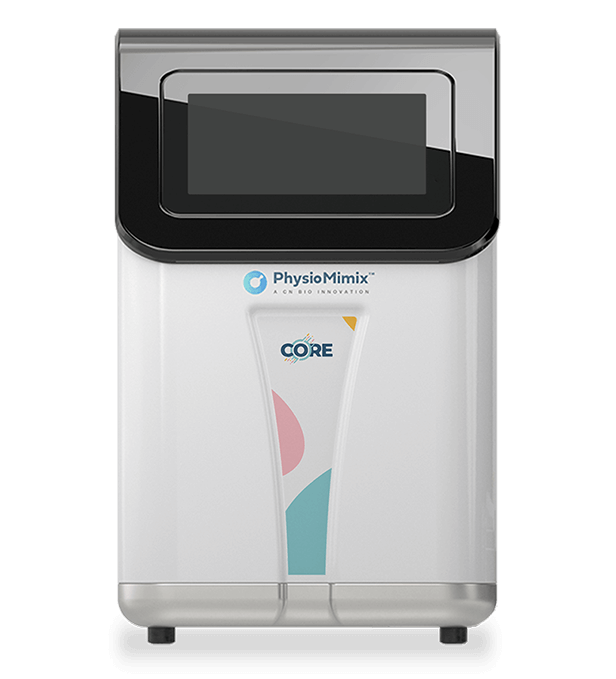
Learn more about the PhysioMimix Core microphysiological system.
References:
- Majer et. al. (2024) | DOI: 10.1039/D4LC00504J
- Hellen et. al. (2025) | DOI: 10.1101/2025.01.08.631261
- Kopp et. al. (2024) | DOI: 10.1016/2024.503762
- Dochi et. al. (2022) | DOI: 10.1039/D1LC01161H
- Milani et. al. (2022) | DOI: 10.1039/D2LC00276K

Dr. Sarah Payne
Director of Marketing
With a BSc in Biochemistry with Toxicology, a PhD in Receptor Pharmacology, and years of commercial experience in the life sciences sector, she has a unique ability to translate complex science into commercially successful market strategies.