
Resource > Scientific publications >
Multiorgan microphysiological systems as tools to interrogate interorgan crosstalk and complex diseases
Filed under: ADME, DILI, Disease modeling, Drug absorption, Drug metabolism, and Safety toxicology
This 2022 FEBS Letters Perspective by Martin Trapecar reviews how multiorgan microphysiological systems (MOMPS) can be used to study interorgan crosstalk and complex diseases such as metabolic, autoimmune, and neurodegenerative disorders. It is a review and opinion article, so it presents no original data of its own. Trapecar argues that many complex diseases are systemic rather than confined to one organ, that their compensatory mechanisms obscure cause and effect, and that connecting several organ models with continuous multiomic monitoring offers a route to unpick those relationships.
Publication at a glance
| Publication | Trapecar M. Multiorgan microphysiological systems as tools to interrogate interorgan crosstalk and complex diseases. FEBS Letters. 2022;596(5):681-695. |
| DOI | 10.1002/1873-3468.14260 |
| Key themes | Two-way and multi-way tissue interactions, the cellular secretome, migratory immune cells, systems biology with multiomics, and current barriers to adoption. |
| Scope | The current state of multiorgan microphysiological systems (MOMPS) for modeling interorgan crosstalk and complex, systemic diseases. |
| Main argument | Connecting multiple organ models under controlled conditions and continuous multiomic monitoring could help researchers derive causal relationships in complex diseases that reductionist and animal models tend to miss. |
| Organ systems discussed | Gut, liver, brain, kidney, skin, heart, pancreas, reproductive tissues, bone marrow, and lymph node, among others, as cited examples. |
Table of Contents
What this perspective is about
Trapecar frames a problem: metabolic, autoimmune, and neurodegenerative diseases are rising, and many of them are systemic rather than tied to a single organ. He uses the gut-liver-brain axis as the running example. Inflammatory bowel disease (IBD) patients are more likely to develop certain inflammatory liver conditions, and patients with dementia, Alzheimer’s, or Parkinson’s disease often report gastrointestinal problems before any neurological symptoms appear.
The central claim is that the hardest part of studying these diseases is deriving causality. Knockout animals (a top-down approach) and simple cell cultures (a bottom-up approach) both change the natural state of the system, and compensatory mechanisms often mask the true role of a given cell type or gene. Trapecar positions MOMPS as a way to scale biological complexity up or down on purpose, so researchers can add or remove tissues and cell types and watch what changes.
The rest of the perspective works through how these systems are built (biological material, cellular integration, circulation, and physiological cues), what interorgan signaling they need to capture (the cellular secretome and migratory immune cells), and how systems biology and multiomics turn those observations into testable models of cause and effect.
Find out more about CN Bio Liver-on-a-chip models here
Find out more about CN Bio DILI assays here
What the perspective argues
Trapecar organizes the field by interaction complexity.
Two-way interactions are the most established. He highlights the liver as the organ most often included, given its role in drug metabolism and toxicity. In one cited gut-liver study, coupling human liver (hepatocytes and Kupffer cells) with intestinal tissue (enterocytes, goblet cells, and dendritic cells) over two weeks changed transcription linked to hepatic bile acid release, cytochrome P450 (CYP450) upregulation, and intestinal FGF19 secretion, and produced non-linear shifts in cytokine responses under inflammatory conditions. Because the gut barrier sits upstream of the liver, systems like these can be used to study first-pass metabolism of oral drugs. A separate two-organ chip pairing pancreatic islet microtissues with liver spheroids kept functional insulin responses for up to 15 days in insulin-free medium, with the islets releasing insulin in response to a glucose load and the liver spheroids taking that glucose up.
Three-way and larger setups extend the same logic. Trapecar cites a gut-liver-kidney-skin model that reached metabolic homeostasis within four days and held it for at least 28 days, independent of the cell line or donor. In a liver-heart-lung-endothelium-brain-testes model, the anticancer drugs capecitabine and ifosfamide were metabolized by the liver into products that were toxic to the heart, lung, and brain compartments, while removing the liver MPS removed that downstream toxicity. He also describes systems that integrate up to fourteen tissues.
Migratory immune cells get their own treatment. Trapecar walks through models that add circulating monocytes, T cells, and other immune populations to study how they move between tissues and shape inflammation. In a model of ulcerative colitis with concurrent liver inflammation, adding adaptive CD4+ T cells drove strong T-cell responses and disruption of the gut barrier, while their absence reduced colitis-associated inflammation.
The last theme is causality through systems biology. Using short-chain fatty acids as an example, Trapecar describes how the same molecules can push tolerance-inducing pathways and fatty acid oxidation under low inflammation, then switch toward glycolysis and immune effector function during acute T-cell-driven inflammation. In a six-organ system paired with untargeted metabolomics, a simulated oral dose of the Parkinson’s drug tolcapone changed 18 biomarkers in the brain compartment, tracked to perturbed tryptophan and phenylalanine metabolism.
Why this perspective matters
For scientists building or choosing organ-on-a-chip models, the value here is less new data and more a map of what MOMPS can and cannot do right now. Trapecar makes the case that connecting organ models can reveal behaviors that isolated tissues do not show, such as the non-linear cytokine responses and cross-organ drug toxicity described above, and that this only becomes interpretable when the system is monitored with multiomics and analyzed with systems-biology methods.
He is direct about the limits. Most MOMPS studies are proof-of-principle and are still run in the labs that developed the platforms. He sorts the outstanding work into four categories: technical (physiological relevance, ease of use, and reliability), biological (single-donor models and a universal medium), logistical (access to the technology), and standardization and validation (repeatability, transferability, and validation across groups). That candor is a large part of what makes the article useful for anyone deciding where these systems fit in a preclinical workflow.
Key study takeaways
- This is a Perspective article, not an experimental study. It reviews the multiorgan microphysiological systems (MOMPS) field and argues for its role in studying complex diseases, without reporting new data.
- The core argument is that systemic diseases obscure cause and effect, and that scaling biological complexity across connected organ models can help researchers derive causality.
- Cited examples run from two-organ chips (gut-liver, islet-liver) through to systems integrating up to fourteen tissues, covering drug metabolism, cross-organ toxicity, immune crosstalk, and metabolic homeostasis.
- Trapecar stresses that multiomic monitoring and systems-biology analysis are what make multiorgan interactions interpretable.
- The article is candid about current limits: most MOMPS work is proof-of-principle, done in originator labs, and constrained by technical, biological, logistical, and validation challenges.
Why this perspective is worth reading
This perspective is useful because it gives a structured, honest account of where multiorgan microphysiological systems stand, written by a researcher who has published extensively on gut-liver and gut-liver-brain models. It helps drug discovery scientists, toxicologists, and disease modeling teams decide when a connected multiorgan model adds something a single-organ model cannot, and it sets realistic expectations by naming the technical and validation gaps that still limit the approach. For teams comparing commercialized platforms, Figure 4 also places the available systems, including CN Bio’s PhysioMimix Multi-Organ System, in one view.
FAQs
It is a single-author Perspective in FEBS Letters by Martin Trapecar. It reviews the multiorgan microphysiological systems (MOMPS) field and presents an argument rather than original experimental results.
Trapecar argues that many complex diseases are systemic rather than organ-specific, and that connecting multiple organ models under continuous multiomic monitoring can help researchers derive the causal relationships that reductionist and animal models tend to obscure.
A MOMPS is an in vitro system, also known as an organ-on-a-chip, that fluidically connects two or more organ or tissue models so their interactions can be studied. The perspective describes both individual MPSs coupled together and standalone multiorgan platforms.
It focuses heavily on the gut-liver-brain axis, and also discusses kidney, skin, heart, pancreas, reproductive tissues, bone marrow, and lymph node models as cited examples.
Trapecar notes that most MOMPS studies are proof-of-principle and are usually run in the laboratories that developed the platforms. He groups the outstanding challenges into technical, biological, logistical, and standardization and validation categories.
Drug discovery scientists, toxicologists, and disease-modeling and translational biology teams who want a current, realistic overview of multiorgan microphysiological systems and where they fit in preclinical research.
Full citation
Related products and services
Contract research services
Discover how to utilize our cross-species models to inform next-step decision making via our DILI in vitro Contract Research Services here.
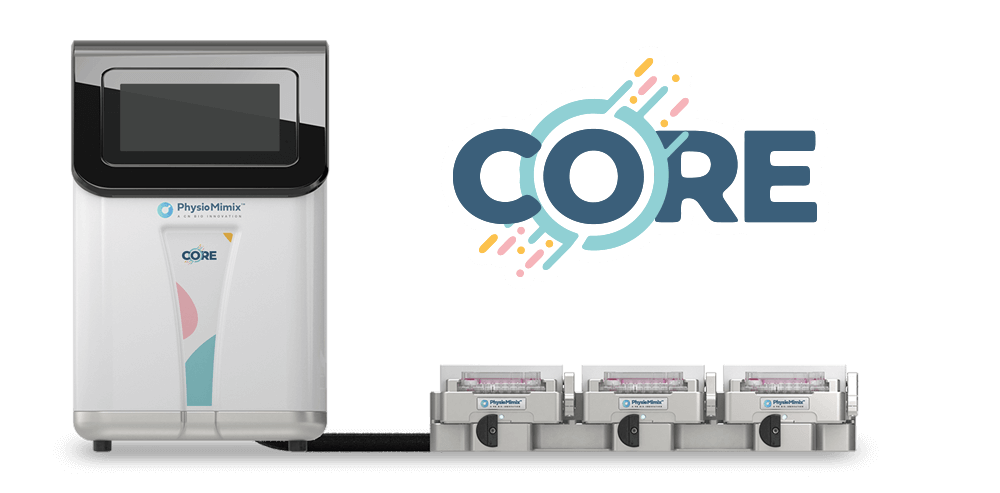
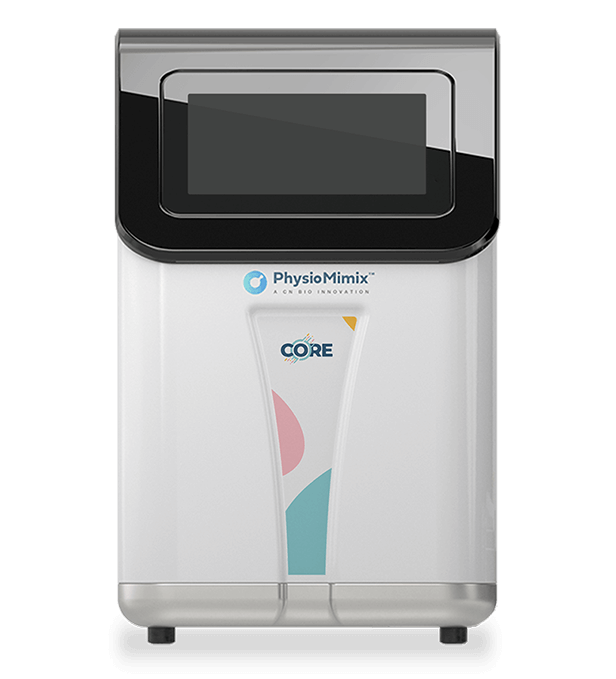
Add PhysioMimix Core in your lab
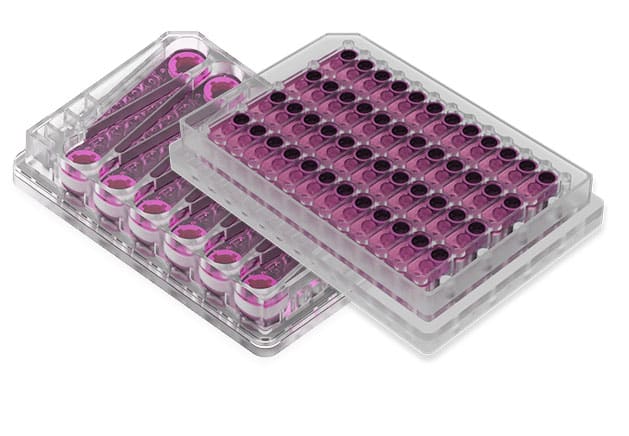
To develop your own cross-species Liver MPS models, you will need: