

Resource > Scientific publications >
Characterizing the reproducibility in using a liver microphysiological system for assaying drug toxicity, metabolism, and accumulation
Filed under: ADME, DILI, Drug metabolism, Immune-mediated liver injury, Regulatory, and Safety toxicology

Summary
The study used the CN Bio liver microphysiological system (liver MPS), a perfused three-dimensional co-culture of primary human hepatocytes and primary human Kupffer cells, to test whether a liver organ-on-a-chip can generate reproducible data for drug toxicity, metabolism, and intracellular accumulation. Working across two laboratory sites and two Kupffer cell batches, the team reproduced inflammation-dependent trovafloxacin hepatotoxicity, showed that hepatocytes in the liver MPS held CYP3A4 activity and albumin production stable for more than two weeks (longer than spheroid or sandwich cultures), and quantified troglitazone phase II metabolites, diclofenac clearance, and chloroquine accumulation. The authors, who include scientists from the US Food and Drug Administration (FDA) and CN Bio, propose paired LDH and CYP3A4 activity assays as quality control metrics that make the liver MPS reliable enough for general drug evaluation.
Study facts at a glance
| Publication | Rubiano A, Indapurkar A, Yokosawa R, Miedzik A, Rosenzweig B, Arefin A, Moulin CM, Dame K, Hartman N, Volpe DA, Matta MK, Hughes DJ, Strauss DG, Kostrzewski T, Ribeiro AJS. Characterizing the reproducibility in using a liver microphysiological system for assaying drug toxicity, metabolism, and accumulation. Clinical and Translational Science. 2021;14(3):1049-1061. |
| DOI | 10.1111/cts.12969 |
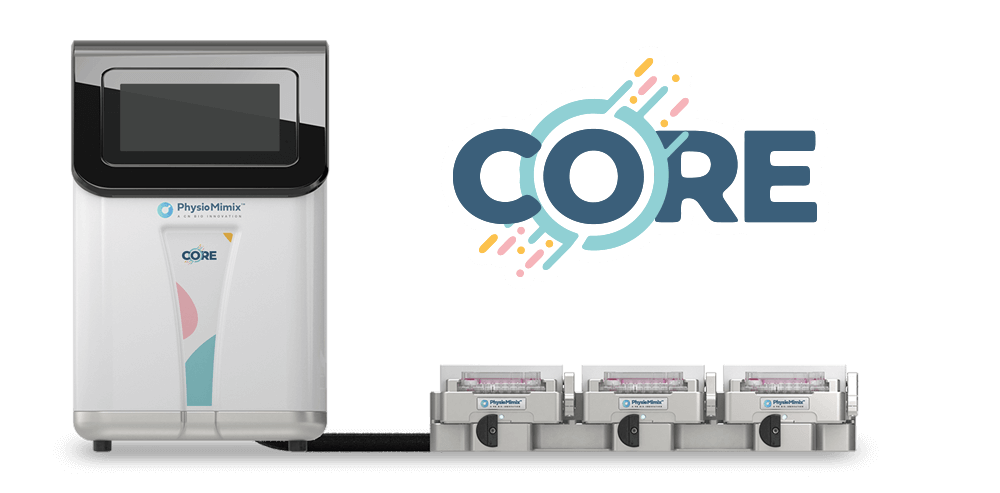
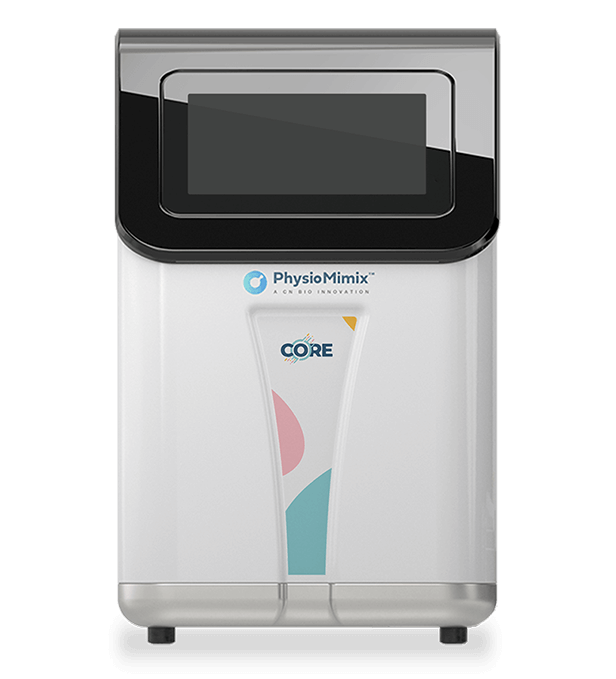
| CN Bio product used | PhysioMimix® Liver plate-12 (LC-12) and PhysioMimix Core System |
| How the platform was used | Primary human hepatocytes were co-cultured with primary human Kupffer cells in three-dimensional, perfused, recirculating culture (1.6 ml media volume) and maintained for up to 29 days to assay drug toxicity, cytochrome P450 3A4 (CYP3A4) activity, albumin secretion, phase II metabolism, and intracellular drug accumulation. |
| Biological context | Human liver; primary human hepatocytes (PHHs) and primary human Kupffer cells (PHKCs); a three-dimensional perfused organ-on-a-chip co-culture used for hepatotoxicity, drug metabolism, and pharmacokinetic readouts, including inflammation-mediated drug-induced liver injury triggered by lipopolysaccharide (LPS) activation of Kupffer cells. |
| Comparator | Hepatocyte spheroids and sandwich (collagen-overlay) cultures grown from the same hepatocyte batch; results were also cross-checked between two test sites and two batches of primary human Kupffer cells. |
| Key readouts | Lactate dehydrogenase (LDH) release, CYP3A4 activity, albumin production, interleukin 6 (IL-6) secretion, half-maximal effective concentration (EC50) values, phase I and phase II metabolite quantification by liquid chromatography-mass spectrometry (LC-MS), intracellular drug accumulation, an 84-gene drug-metabolism polymerase chain reaction (PCR) array, and brightfield scaffold imaging. |
| Main interpretation | The liver MPS produced reproducible toxicity, metabolism, and accumulation data across sites and cell batches and kept hepatic function stable for longer than spheroids or sandwich cultures, with paired LDH and CYP3A4 measurements serving as practical quality control metrics for reliable use. |
Table of Contents
Which CN Bio product was used?
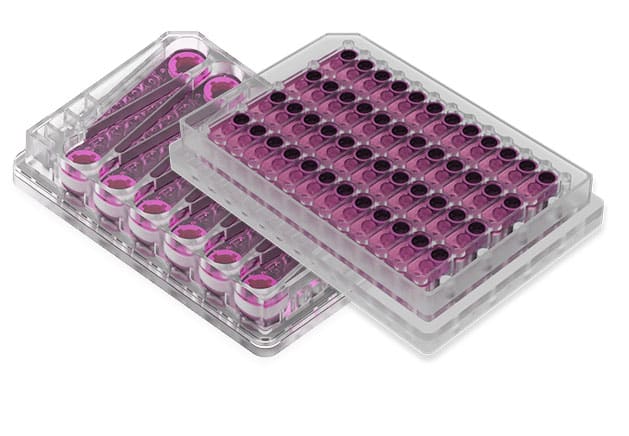
The study used the CN Bio liver microphysiological system (liver MPS), referred to in the paper as the LiverChip culture system and assembled according to CN Bio Innovations Ltd. recommendations. It is a perfused multiwell plate that holds primary human hepatocytes in a three-dimensional scaffold under continuous, recirculating fluid flow, with the option to co-culture primary human Kupffer cells. In this work, hepatocyte viability was confirmed above 85% before use, each plate carried up to 12 wells, the working media volume was 1.6 ml per circuit, and Kupffer cells were activated where required with lipopolysaccharide (LPS) at 1 ug/ml. The liver MPS was the platform for every long-duration and co-culture experiment, while spheroid and sandwich cultures were run in parallel as comparator formats, and liquid chromatography-mass spectrometry (LC-MS) was used off-platform to measure metabolites and drug accumulation in samples drawn from the system.
What this paper is about
Liver microphysiological systems can keep human liver cells functional in conditions that better resemble the liver than standard two-dimensional culture, yet a decade after their introduction they were still not used routinely in drug development. The barrier was reproducibility: without agreed quality control and performance criteria, results varied between operators, plates, and sites. This study set out to test whether one commercially available liver MPS could deliver consistent results for the three readouts that matter most in pharmacology and toxicology (drug toxicity, drug metabolism, and intracellular accumulation), using only commercially available cells, devices, and supplies so the workflow could transfer to other laboratories. The work was carried out as a collaboration between the FDA and CN Bio, and it compared the liver MPS against two widely used culture formats, hepatocyte spheroids and sandwich cultures.
What the researchers found
The liver MPS reproduced the hepatotoxicity of trovafloxacin, an antibiotic that causes idiosyncratic, inflammation-linked liver injury in people. The model reported that 100 uM trovafloxacin raised lactate dehydrogenase (LDH) release to more than four times baseline when co-dosed with LPS, and that 100 uM trovafloxacin reduced cytochrome P450 3A4 (CYP3A4) activity to below 10% of baseline with or without LPS. These effects held across both test sites and both Kupffer cell batches, while the non-toxic control levofloxacin produced no such changes.
Hepatocytes in the liver MPS showed different sensitivity to toxicants than cells in spheroids or sandwich cultures grown from the same hepatocyte batch. The model was more resistant to troglitazone (half-maximal effective concentration, EC50, of 210.9 uM in the liver MPS versus 67.1 uM in spheroids and 35.1 uM in sandwich cultures) and to tamoxifen, while digoxin sensitivity in the liver MPS resembled sandwich cultures. Across platforms, falls in CYP3A4 activity and albumin production often preceded LDH release, which suggests loss of hepatic function can occur before cell death.
Liver function lasted longer in the liver MPS. CYP3A4 activity stayed above 20% of its day-3 level through day 29, whereas sandwich cultures lost detectable CYP3A4 activity by day 12 and spheroids fell below 20% after day 20. Albumin production rose over time in the liver MPS and peaked around day 15, while it declined in the other two formats.
The system also supported metabolism and accumulation studies. Troglitazone was almost fully metabolized within 48 hours, and its phase II metabolites (troglitazone glucuronide and troglitazone sulfate) were quantified by LC-MS, with higher amounts at 50 uM than at 100 uM. Diclofenac was metabolized, but its glucuronide proved unstable at 37C within two hours, so phase II metabolites were only measurable when stable in the medium. Chloroquine, a drug known to accumulate in the liver, was detected inside hepatocytes at roughly five times the extracellular concentration, and a separate test of six compounds found no meaningful adsorption to the device, supporting that the measured accumulation was biological.
For quality control, LDH and CYP3A4 measured from the perfusate flagged underperforming wells without destroying the culture. A well with a low cell count showed high LDH, confirmed by imaging, and an 84-gene drug-metabolism PCR array independently separated the same outlier wells, supporting paired LDH and CYP3A4 activity assays as reliable, non-invasive quality control indicators.
Why the paper matters
The result gives drug developers a practical way to trust liver MPS data: run LDH and CYP3A4 as quality control before reporting, exclude wells that fail, and expect consistent results across sites and cell batches. Because the longer functional window of the liver MPS keeps hepatocytes active for more than two weeks, the platform suits questions that simpler cultures cannot answer well, such as chronic or repeat-dose toxicity, inflammation-mediated liver injury that depends on hepatocyte and Kupffer cell co-culture, and phase II metabolism or slow-clearance drugs. With FDA authors involved and an explicit framing around replacing, reducing, or refining animal use, the study adds regulatory-facing evidence for where a liver MPS can sit in drug evaluation.
Key study takeaways
- The study used the CN Bio liver MPS to test reproducibility of drug toxicity, metabolism, and intracellular accumulation across two sites and two Kupffer cell batches.
- The model reproduced inflammation-dependent trovafloxacin toxicity: LDH release rose above four-fold of baseline only when LPS was co-dosed, while 100 uM trovafloxacin suppressed CYP3A4 activity to below 10% of baseline with or without LPS.
- Compared with spheroids and sandwich cultures from the same hepatocyte batch, the liver MPS showed different toxicant sensitivity, including higher resistance to troglitazone and tamoxifen.
- Hepatic function lasted longer in the liver MPS, with CYP3A4 activity sustained through day 29 and albumin production peaking around day 15.
- The platform quantified troglitazone phase II metabolites, diclofenac clearance, and roughly fivefold intracellular accumulation of chloroquine, with low non-specific compound binding to the device.
- Paired LDH and CYP3A4 activity assays from the perfusate worked as non-destructive quality control, a point the authors present as central to using the liver MPS reproducibly.
Why this paper is worth reading
This paper is useful because it turns a general claim, that liver organ-on-a-chip models are promising, into a concrete and testable workflow with defined quality control. A scientist deciding whether to adopt a liver MPS will find cross-site reproducibility data, head-to-head functional comparisons against spheroids and sandwich cultures, and a clear rule for excluding poor wells, all generated with commercially available materials. It helps answer a practical question: when is a perfused liver MPS the right choice over simpler cultures, and how do you keep its data reliable.
FAQs
The study used the CN Bio liver microphysiological system (liver MPS), described in the paper as the LiverChip culture system and assembled per CN Bio Innovations Ltd. recommendations. It is a perfused multiwell platform for three-dimensional primary human hepatocyte culture.
Primary human hepatocytes were cultured in three-dimensional, perfused, recirculating conditions (1.6 ml media volume), alone or co-cultured with primary human Kupffer cells, and maintained for up to 29 days to assay toxicity, CYP3A4 activity, albumin secretion, phase II metabolism, and intracellular drug accumulation.
The model is a human liver co-culture of primary human hepatocytes and primary human Kupffer cells, applied to hepatotoxicity (including inflammation-mediated drug-induced liver injury), drug metabolism, and drug accumulation, rather than to a single named disease.
The liver MPS produced reproducible toxicity, metabolism, and accumulation results across two sites and two Kupffer cell batches and kept hepatic function stable longer than spheroids or sandwich cultures, with paired LDH and CYP3A4 assays acting as reliable quality control metrics.
The liver MPS was compared with hepatocyte spheroids and sandwich cultures grown from the same hepatocyte batch, and results were cross-checked between two laboratory sites and two batches of primary human Kupffer cells.
Readouts included LDH release, CYP3A4 activity, albumin production, IL-6 secretion, EC50 values, phase I and phase II metabolite quantification by LC-MS, intracellular drug accumulation, an 84-gene drug-metabolism PCR array, and brightfield scaffold imaging.
It gives drug discovery and safety teams a reproducibility framework and a non-destructive quality control method (LDH plus CYP3A4) for a liver MPS, and it identifies the applications (chronic dosing, co-culture-dependent toxicity, phase II metabolism, and drug accumulation) where the platform offers an advantage over simpler cultures.
Full citation
Related products and services
Contract research services
Discover how to utilize our cross-species models to inform next-step decision making via our DILI in vitro Contract Research Services here.
Add PhysioMimix Core in your lab
To develop your own cross-species Liver MPS models, you will need: