




• Skip to main content
  • Skip to footer
UK Plans to phase out animal testing UK Plans to phase out animal testing
  • About us
  • News
  • Events
  • Careers
cn-bio-organ-on-a-chip-logo
  • Products
    • PhysioMimix® Core Microphysiological System
    • Consumables
      • PhysioMimix® Multi-chip plates
      • 3D validated cells
    • Organ-on-a-chip models
    • Gut/Liver-on-a-chip
    • Lung-on-a-chip
    • Support packages
  • Applications
    • Disease modeling
    • Safety toxicology
    • ADME
  • Services
    • Non-Alcoholic Steatohepatitis
    • Drug-Induced Liver Injury
    • ADME
  • Technology
  • Resources
  • Company
    • About us
    • Events
    • News
    • Careers in Biotech
  • Contact us

Explore our solutions


PhysioMimix® is a suite of hardware, consumables and assay protocols that enable you to recreate complex human biology and accurately predict human drug responses.

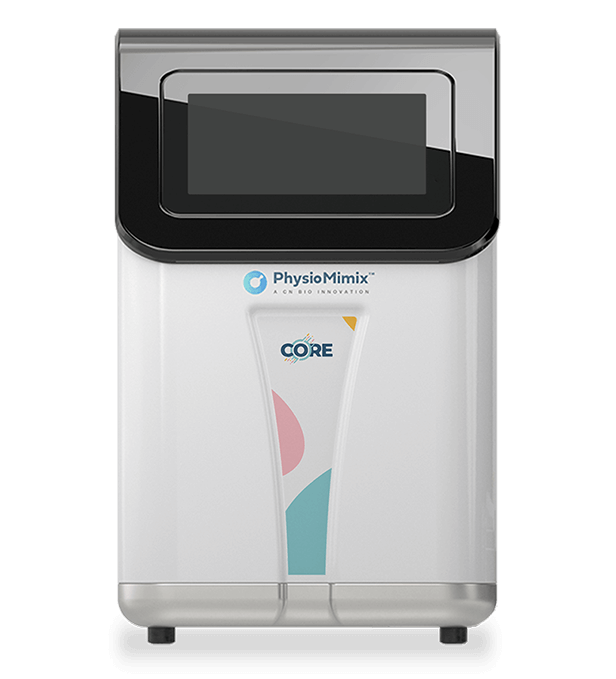
PhysioMimix Core

cnb1476_physiomimix-core_mark_mocks_system_v2
Learn more

Consumables

Multi-chip plates
3D validated cells
Learn more

Models

Single-organ models
- Liver-on-a-chip model
- Lung-on-a-chip model
Multi-organ models
- Gut/Liver-on-a-chip models

Support packages

PhysioMimix® support packages

Discover the applications


Investigate the validated core application areas that our PhysioMimix® products and services support

Learn more

Disease modeling

Metabolic dysfunction-associated steatohepatitis
Hepatitis B
Pulmonary infection
Learn more

Safety toxicology

Drug-induced liver injury
Immune-mediated liver injury
Learn more

ADME

Drug absorption
Drug metabolism
Drug bioavailability
Oligonucleotide delivery
Learn more

Studies as a service


Our team will work collaboratively with you to design a study around your research goals and generate actionable data within weeks

Learn more
icon-nash-1-150x150.png MASLD/MASH
icon-dili-tox-150x150.png Drug-induced liver injury
icon-adme-150x150.png ADME

April 8, 2026

Event > Conference >

British Toxicology Society Congress (BTS 2026)


The annual congress brings together academia, industry, the health service, regulatory and governmental agencies with a shared interest and passion for the science and practice of toxicology.
BTS 2026 Logo | BTS 2026
27-29 April, 2026
Solihull, UK
Book a meeting

We’re presenting at BTS 2026


Attend our Flash Talk

Session: Symposium 4 – Safety of advanced therapeutic modalities

Date: 28 April, 2026, Tuesday

Time: 10:45-11:00am

Venue: Malvern Suite

Speaker: Dr. Emily Richardson


Visit our posters:

Title: Building regulatory confidence in Liver MPS: The 3Rs Collaborative & FDA-CDER’s cross-platform DILI project

More info

Building regulatory confidence in Liver MPS: The 3Rs Collaborative & FDA-CDER’s cross-platform DILI project

Microphysiological systems (MPS) are being tested to determine their ability to predict human responses and how they can best be implemented in different areas of drug development. Increasing scrutiny is being implemented on the accuracy, robustness and reliability of different technologies, moving beyond proof of concept models. Regulators such as the FDA are implementing pathways to evaluate these methods against specific contexts of use (CoUs). Recently, a letter of intent (LOI) was accepted to the FDA’s iSTAND programme for a project to evaluate the ability of 8 commercial liver MPS to detect drug-induced liver injury (DILI) by a consortium begun by the 3Rs Collaborative and FDA CDER. To qualify and compare each model, eight blinded compounds (4 hepatotoxic, 4 non-hepatotoxic paired controls) were provided to each company to test in parallel.

Here, we present the results from one of the Liver MPS from this evaluation, where the compounds were tested on microtissues formed on a continuously perfused scaffold from primary human hepatocytes and Kupffer cells. Dosing occurred for 10 days in a 6-dose concentration range (0.05x to 10x Cmax). Markers for liver viability (LDH, ALT, AST) and functionality (albumin, bile acid, IL-6) were evaluated alongside CYP3A4 activity across the dosing period.

The study identified 4 hepatotoxic and 4 safe compounds. A range of risk profiles and mechanisms of toxicity were identified. With the example of Drug150, higher functional activity (increased albumin and CYP3A4) was detected up to 1x Cmax, after which toxicity was captured at 5x and 10x Cmax through increased LDH, ALT and AST and

decreased albumin, IL6 and CYP3A4. Through the standardized evaluation of the 8 liver MPS in the project, further confidence in the range of each MPS to detect DILI will be delivered, whilst giving a framework for future evaluation projects.

Title: Modelling immune-mediated hepatotoxicity of monoclonal antibodies using a human liver microphysiological system

More info

Modelling immune-mediated hepatotoxicity of monoclonal antibodies using a human liver microphysiological system

Background

Immune-mediated drug-induced liver injury (iDILI) remains a major challenge in the development of biologics, including monoclonal antibodies (mAbs), due to limited human relevance of traditional animal and 2D cell-based models. Aligning with recent regulatory emphasis on new approach methodologies, this study describes the modification of the FDA‑recognised PhysioMimix® DILI assay to incorporate peripheral blood mononuclear cells (PBMCs). to address this with an immune-competent, human liver relevant MPS model. This approach aims to enhance translational relevance and improve safety profiling in drug development pipelines

Methods

Primary human hepatocytes were cultured under dynamic perfusion in Liver‑12 plates using the PhysioMimix® Core to generate three‑dimensional liver microtissues. Hepatic functionality was assessed via CYP activity, albumin, and urea production, alongside clinically relevant injury markers (ALT, AST). After four days, HLA‑matched peripheral blood mononuclear cells (PBMCs) were introduced into the circulating media and co‑cultured with the liver microtissues for a further four days to establish immune competence. Two clinically relevant monoclonal antibodies, ipilimumab (anti‑CTLA‑4) and infliximab (anti‑TNF‑α), were dosed into hepatocyte‑only and co‑culture systems for 48 hours, with samples collected at defined time points post‑dosing. Hepatotoxicity was evaluated using functional biomarkers, while immune activation and inflammatory responses were assessed by cytokine profiling.

Results

PBMC recovery and circulation within the Liver‑12 system were confirmed, demonstrating unhindered traversal of the microfluidic channels and scaffolds with 60–70% immune cell recovery. Following initiation of co‑culture, liver microtissue functionality and stable immune phenotypes were maintained over four days. In immune‑competent cultures, treatment with monoclonal antibodies resulted in clear immune‑mediated hepatotoxicity, evidenced by significant elevations in LDH and ALT/AST alongside reductions in functional biomarkers, including albumin and urea. Notably, a pronounced pro‑inflammatory cytokine response was observed exclusively following ipilimumab exposure, consistent with clinical reports of T‑cell–driven immune activation.

Conclusion

This proof-of-concept study demonstrates the utility of an immune-competent human liver microphysiological system for predicting immune-mediated hepatotoxicity of monoclonal antibodies, supporting its potential role in improving translational safety assessment. 


Meet the team at BTS 2026

Emily USE THIS ONE | BTS 2026

Dr. Emily Richardson

Biology Group Leader

Dr. Emily Richardson is driving development of MPS for toxicology and safety assessment. She led the development of CN Bio’s Lung and Lung/Liver models for infectious disease research and inhaled therapeutics, and spearheaded multiple other collaborative and grant-funded programmes, published peer-reviewed papers, and contributed to advancing regulatory acceptance of Organ-on-a-chip.

Her work bridges complex cell biology and real-world drug discovery, informed by a PhD from the University of Leicester in 3D cell culture for metastatic lung cancer and a BSc in Biochemistry and Molecular Medicine degree from the University of Nottingham.
    Isavella BW 300x300 1 | BTS 2026

    Isavella

    Scientist

    Isavella Georgiades is a Scientist in R&D Safety Toxicology at CN Bio, where she works on the development and biological validation of human-relevant microphysiological systems for drug safety assessment. Her work focuses on Liver-on-a-chip platforms, including cross-species and immune-integrated models, to improve the prediction and mechanistic understanding of drug-induced liver injury (DILI).
    She holds a BSc in Biochemistry and an MRes in Regenerative Medicine and Stem Cells from Newcastle University, bringing a strong multidisciplinary foundation to her role. Isavella is particularly interested in how tissue microenvironments and immune interactions shape toxicity responses and is passionate about advancing Organ-on-chip technologies toward broader scientific and regulatory adoption.

      British Toxicology Society Congress (BTS 2026)

      Book a meeting

      Speak to our experts

      Request a meeting with one of our OOC experts to see how our products and services can support your studies

      Request a meeting

      Footer

      CN Bio logo

      332 Cambridge Science Park, Milton Road
      Cambridge, CB4 0WN

      UK: +44 (0) 1223 737 941

      US: +1 415 523 4005

      Privacy | Cookies | Regulatory | Accessibility
      Website terms | Terms of sale

      Product Recycling

      ©2025 CN Bio Innovations Ltd
      Registered No. ‍06517359. VAT No. GB978184563

      Latest news

      • Do MHRA and FDA guidelines on non-animal methods in drug development align? March 27, 2026
      • CN Bio to participate in 3Rs Collaborative-led project with FDA to build confidence in Liver MPS for DILI – now ISTAND accepted! January 25, 2026
      • Taking organoids to the next level January 14, 2026
      Cyber Essentials Logo

      Modal Title