




Resource > Articles >
Organ on a chip systems move closer to the drug development mainstream
Filed under: General OOC and Regulatory
Regulatory pressure is reshaping how the pharmaceutical industry thinks about preclinical testing. In April 2025, the FDA released a strategic roadmap aiming to make animal testing the exception, not the rule, for preclinical safety and toxicity studies within three to five years. The same month, the National Institutes of Health began requiring that new funding notices involving animal models incorporate human-focused approaches, including Organ-on-a-chip systems (also known as microphysiological systems). The UK followed in November 2025 with its own roadmap to phase out animal testing and accelerate validated alternatives, and more recently, the European Commission published their roadmap for regulatory acceptance of new approach methodologies in June 2026.
At CN Bio, this shift matters. We have spent years building a platform capable of meeting the demands of stricter regulatory scrutiny. Momentum is starting to align with where the technology already is.
Organ on a chip systems built to inform drug development decisions
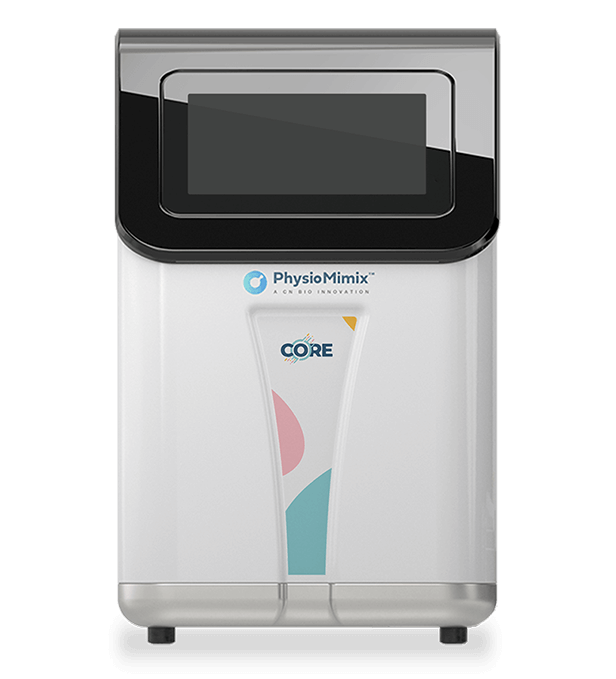
CN Bio started with a liver-on-a-chip, but the PhysioMimix® platform now covers intestine, lung, kidney, and multi-organ configurations. Applications span safety, toxicology, and disease modeling.
Learn more about the range of applications we offer
“In the toxicology space, we have a very well-known and well-utilized model of Drug-induced liver injury,” says Tomasz Kostrzewski, PhD, CN Bio’s Chief Scientific Officer. This model is in active use by several global contract research organisations, and we also offer it as a service to drug developers. We also provide a multi-organ system linking the gut and liver chip models to predict oral bioavailability, alongside disease models covering metabolic liver disease and chronic obstructive pulmonary disease.
These are not demonstration experiments. The standard matters: “We have a number of molecules that we have helped take to the clinic”. Customers are also using CN Bio chips to make no-go decisions on drug programs before committing further investment, de-risking their roadmaps in the process. “That’s the ultimate proof that these technologies do what they say,”.
The right question at the right time
One of the more persistent misconceptions for adoption of Organ-on-a-chip systems is a mismatch between what the technology can do and what some stakeholders expect it to do. The misconception that Organ-on-a-chip technology can fully replace animal models today is not a position the field has taken.
The more useful framing is about fit; using these tools to answer the right question and the right context of use at the right time alongside all those other approaches that are out there. That kind of precision in positioning is what allows drug developers to integrate data from Organ-on-a-chip systems into existing workflows without being asked to abandon what already works.
What’s enabling the next phase of adoption of Organ on a chip systems
Development work is focused on several parallel threads. Immunology is a priority. The company recently presented early data adding peripheral immune cells into its liver model to assess the toxicity of monoclonal antibodies, an area of growing importance as biologics continue to dominate drug pipelines. Customers are also building neuronal blood-brain barrier models on the PhysioMimix platform to study how drugs cross that barrier, and kidney models are in development through external partnerships.

On-demand webinar: Building confidence for regulatory decision making with immune-competent liver models
Dr. Emily Richardson and Dr. Justina Then explore emerging immune-competent models designed to predict immune-mediated toxicity for newer therapies – Coming soon on demand
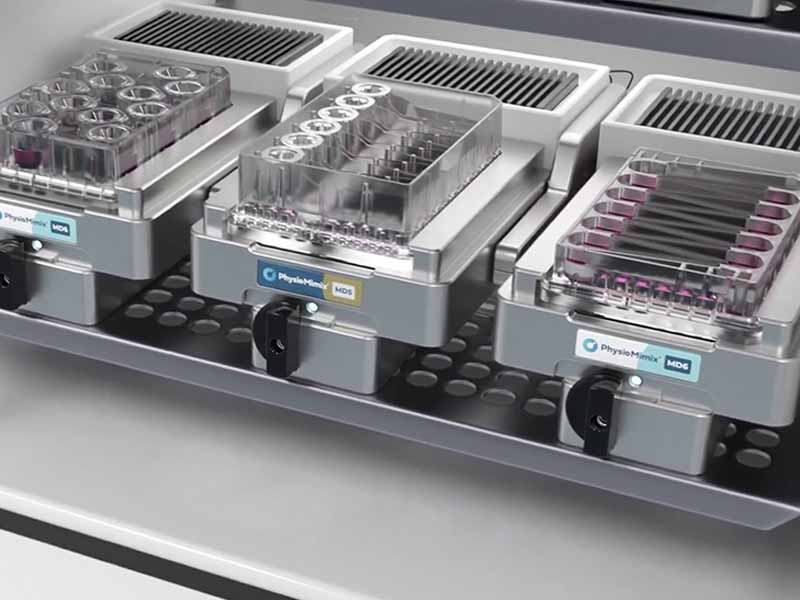
Automation is the other major axis. Our open design integrates with standard robotic systems, which makes it compatible with high-throughput screening workflows. Running more chips in parallel with less manual intervention reduces variability and opens the platform to larger compound libraries. There is also potential for real-time sensing, analogous to monitoring systems already used in biomanufacturing, to track system performance and generate functional readouts during experiments.
The broader shift
Adoption of Organ-on-a-chip systems across the industry is still uneven. Drug developers have decades of institutional investment in animal models, and that does not change quickly. But the regulatory environment in 2025 and 2026 has sent a clear signal, and companies with validated, translational platforms are better placed to meet that moment than those still building toward it.
CN Bio’s position is grounded in demonstrated outcomes rather than projected ones. Molecules have reached the clinic. No-go decisions have been made. The PhysioMimix platform is already embedded in workflows at clinical research organizations and pharmaceutical companies worldwide.
The question for drug developers is no longer whether Organ-on-a-chip systems can produce useful data. The debate has moved on, Organ-on-a-chip systems are already generating decision-relevant data. The focus now is on how broadly the technology is embedded into drug development workflows.
Learn more about using the PhysioMimix platform for your ADME studies
Read the full perspective on the future of Organ-on-a-chip technology
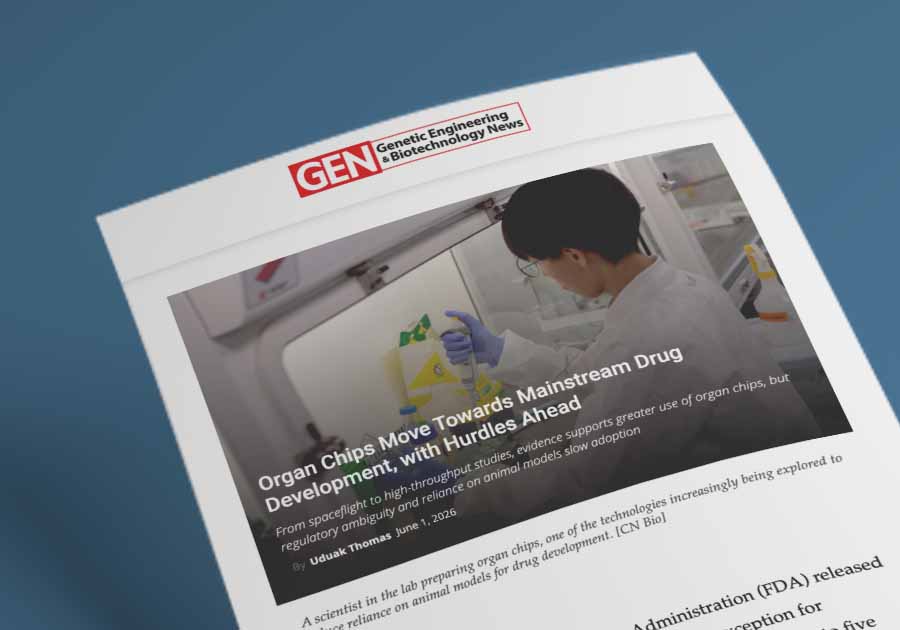
Human-relevant models are increasingly being used in drug development, with Organ-on-a-chip systems gaining traction as regulators and researchers push to reduce reliance on animal testing. While momentum continues to build, questions around validation, standardisation, and real-world adoption remain key challenges. For a closer look at the scientific progress, regulatory drivers, and barriers still shaping uptake, read the full article in Genetic Engineering & Biotechnology News.
The full article was published in Genetic Engineering & Biotechnology News.

Why the FDA animal testing phase-out for monoclonal antibodies? – Read the full Blog
UK plans to phase out animal testing faster in favor of alternative methods – Read the Full Blog

Dr. Tomasz Kostrzewski
Chief Scientific Officer
Prior to joining CN Bio, he worked at Imperial College London in the Department of Life Sciences studying immune cell development and stem cell differentiation, as well as at GlaxoSmithKline working in biopharmaceutical drug discovery and development. Dr Kostrzewski holds three degrees from the University of Sheffield and Imperial College London in Cell and Molecular Biology.