




Resource > Posters >
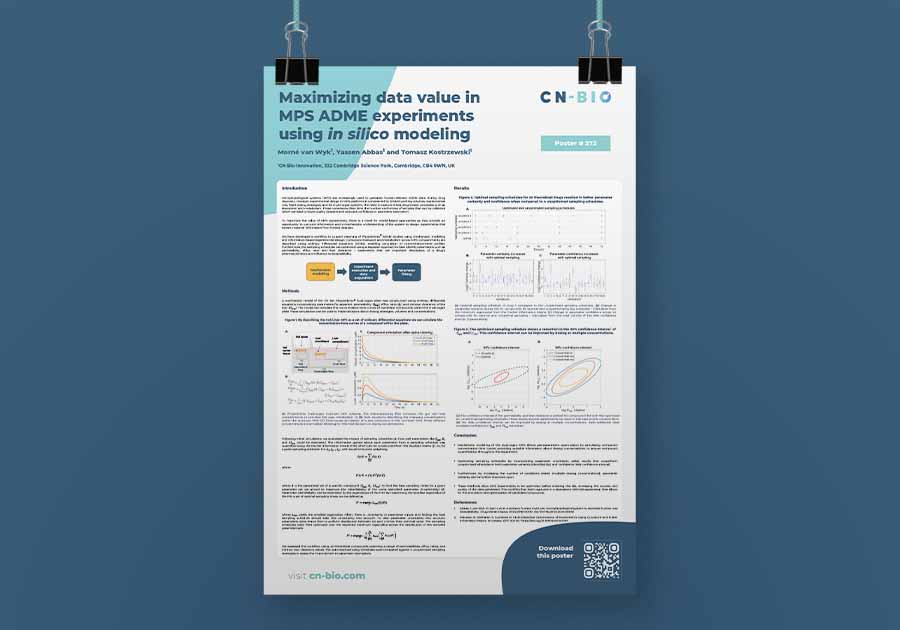
Maximizing data value in MPS ADME experiments using in silico modeling
A model-informed workflow that combines ADME experiments with mechanistic in silico modeling.
Filed under: ADME
Microphysiological systems (MPS) are increasingly used to generate human-relevant ADME data during drug discovery.
However, experimental design in MPS platforms is constrained by limited working volumes, experimental cost, fixed dosing strategies, and for multi-organ systems, the need to capture interacting kinetic processes such as absorption and metabolism. These constraints often limit the number and timing of samples that can be collected which can lead to lower quality datasets and reduced confidence in parameter estimation.
To maximize the value of MPS experiments, there is a need for model-based approaches as they provide an opportunity to use prior information and a mechanistic understanding of the system to design experiments that extract maximal information from limited datasets.
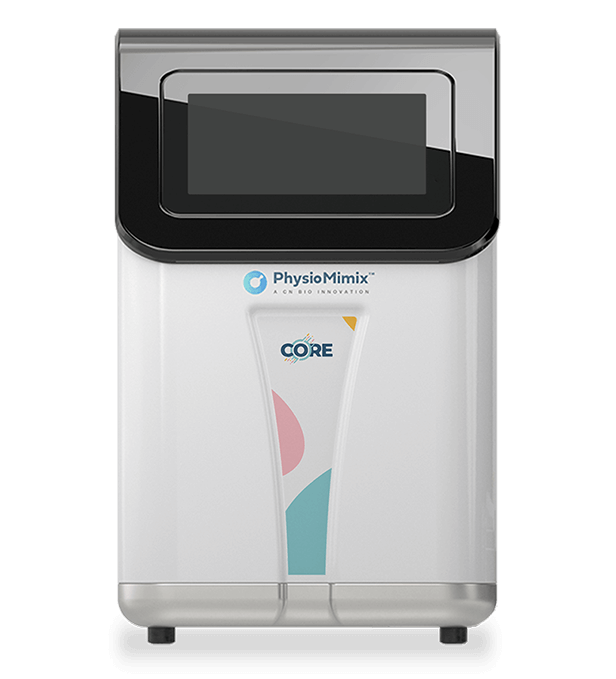
We have developed a workflow to support planning of PhysioMimix® ADME studies using mechanistic modeling and information-based experimental design. Compound transport and metabolism across MPS compartments are described using ordinary differential equations (ODEs), enabling simulation of concentration–time profiles. Furthermore, the sampling schedules are optimized using a Bayesian approach to best identify parameters such as permeability, efflux ratio and liver clearance – parameters that are important descriptors of a drug’s pharmacokinetics and influence its bioavailability.