




Resource > Case studies >
How Pharmaron is advancing DMPK and toxicology studies with human-relevant MPS
See how a global CRO is applying MPS to improve translational confidence across workflows
Filed under: ADME, DILI, Disease modeling, Drug bioavailability, Drug metabolism, General OOC, MASLD/MASH, and Safety toxicology
For Pharmaron, a global contract research organization (CRO), operating at the forefront of science is essential to solving increasingly complex challenges for its clients.
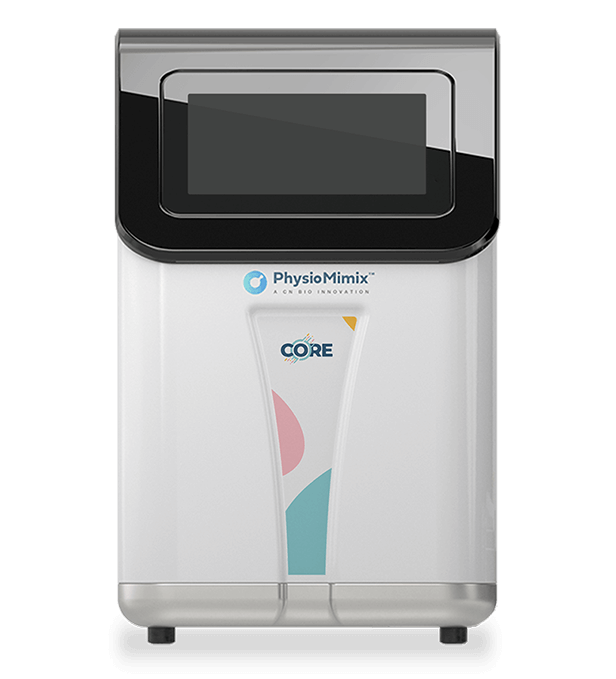
This drive for innovation recently led the team to partner with CN Bio and integrate PhysioMimix® Microphysiological Systems (MPS) into internal workflows.
Their goal is to expand Pharmaron’s service portfolio with MPS-based assays that bring greater human relevance to multiple stages of drug discovery and development.
As Chief Scientist for DMPK at Pharmaron, Barry Jones sees the adoption of MPS as a strategic imperative, offering the more holistic approach needed for modern drug discovery. That view was reinforced by early validation studies designed to test the platform’s performance compared to in-house standards before moving into more complex MPS models, and whether it could deliver the consistency needed to support broader application.
“The results compared very well, we were getting reproducible results across the different formats… giving us the confidence to start looking at other things,” he explains.

One example was Pharmaron’s decision to benchmark the PhysioMimix Liver MPS against a well-established DMPK hepatocyte assay. The close alignment between the two gave the team confidence that the system could reliably reproduce known outcomes. “We could see that within a standard setup; the data were consistent and reproducible” says Jones, especially for compounds that are very metabolically stable, as “a system that you can incubate for longer is, is hugely advantageous in that space.”
Solving the adsorption challenge
One of the technical drivers for selecting the PhysioMimix platform was the low-adherent properties of its Multi-chip consumable plates. Drawing from his previous experience at AstraZeneca, Jones was acutely aware of how compound adsorption onto plastic components can skew experimental results.
He says, “My experience with other systems has been (that) the adsorption of compounds onto the plastics in the system can present an issue in terms of the experiments. And everything that I saw from the PhysioMimix suggested that that would be reduced in that system.”
Versatility across the pipeline
While some labs focus on a single organ, Pharmaron has applied the flexibility and open architecture of the PhysioMimix platform to further develop a diverse suite of complex in vitro models (CIVMs) across its sites, including using the Dual-organ plate, to study inter-organ interactions that static systems cannot capture.
Applications in development at Pharmaron include:
- DMPK and bioavailability: developing Gut/Liver models to measure human absorption and clearance in a single experimental setting.
- Advanced toxicology: improving Drug-Induced Liver Injury (DILI) models by adding Kupffer cells to incorporate immunogenic components.
- Disease modeling: using lung cell models (alveolar and bronchus) and metabolic models for MASH (Metabolic Dysfunction-Associated Steatohepatitis).
Together, these applications are part of a broader shift toward generating data that is more predictive of human response. “So, what we end up moving towards the clinic are compounds which are pharmacokinetically appropriate, which are answering the biology question based on a human biology system and are safe based on human-relevant tox assays,” says Jones.
Discover more about the adaptability of PhysioMimix Core in our animation
Reducing attrition with human-relevant models
The ultimate goal of Pharmaron’s investment in MPS is to improve the translatability of client’s drug candidates from the bench to the clinic. By using human-relevant systems early in the process, Jones believes the industry may be able to improve decision-making and better understand potential risks before compounds advance into clinical development.
“The big selling point is it’s in human,” Jones highlights. “We’ve got a human cell system in a physiologically relevant experimental setup. So, what we’re able to do then should have much more translatability to the human in vivo situation”.
Jones continues, “part of the huge potential here is the question around things like PK/PD”. By using multi-organ models to better account for the biological processes involved in drug disposition and target engagement, we believe researchers may gain additional insights that could support decision-making during drug development. Another area cited by Jones that could prove interesting for MPS is the study of drug-drug interaction. Current in vitro systems can answer many drug–drug interaction questions but in a world of polypharmacy, drugs interact across multiple pathways and organs. Understanding these interactions requires something more physiological that allows interactions to be explored in different organs like the gut and the liver. And potentially in the gut, liver, and kidney together. These connected systems can bring a clearer picture to better understand how multiple drugs behave in complex systems.
In a field where failure rates remain high, the shift from isolated data points to connected, human-relevant insights could have a significant impact by changing how early human studies are run. This ultimately comes back to risk. The better complex interactions are understood early on, the easier it is to mitigate risk, especially before moving into the clinic. In Phase I, MPS could support more informed study planning and go/no-go decision-making and, by basing discovery programs on systems that more closely reflect human biology, they may help identify potential development challenges earlier in the discovery and development process.
How do MPS align with the 3Rs?
Beyond improving data quality, these systems align with the 3Rs (Replacement, Reduction, and Refinement). While discussions around non-animal methods often focus on replacement, especially for larger animal species, Pharmaron’s perspective is more balanced. Jones comments, “You can get compounds, for instance, that are not metabolized in one species that are metabolized in another. And then you make the argument, isn’t human the best (test) species? Well, ultimately, yes, it is”. However, although these systems have the potential to reduce the numbers of animals required, the broader value lies in improving study design and decision-making.
For example, an area underserved in terms of in vitro assays is toxicology, “hopefully it will allow us to give a view on, potential toxicities and toxicology outcomes before we start doing any (in vivo) toxicology studies”, or ”taking something that we know from a toxicology study and saying, well, what do we think that’s going to look like in human”. Furthermore, where we have identified a target organ, coupling it with the Gut/Liver bioavailability system “to say, if we mimic a human dose, what’s the, what’s the potential for the toxicity look like?”
And then there’s newer drug modalities to consider, “we need to understand alternative (MPS) systems that we’re coming up with, particularly in the large molecule space”. We need to better “understand how large molecules are being processed by the body” that’s “where I can see these, these systems really, really kicking in.”
For Pharmaron, the PhysioMimix system is a key component part in a new approach to drug discovery and development that combines MPS data with AI and predictive modelling to push the boundaries of pharmaceutical science. The collaborative partnership with CN Bio is an important part of their journey as “we’re able to work closely with the CN Bio team and feedback results and then a change is made”, He continues “we are working to build a true partnership with the CN Bio team, where technical questions can be openly discussed and addressed collaboratively.”

Talk to an expert to discuss your model

Explore PhysioMimix Core in more detail

PhysioMimix Core applications